
Natural Gas Extraction
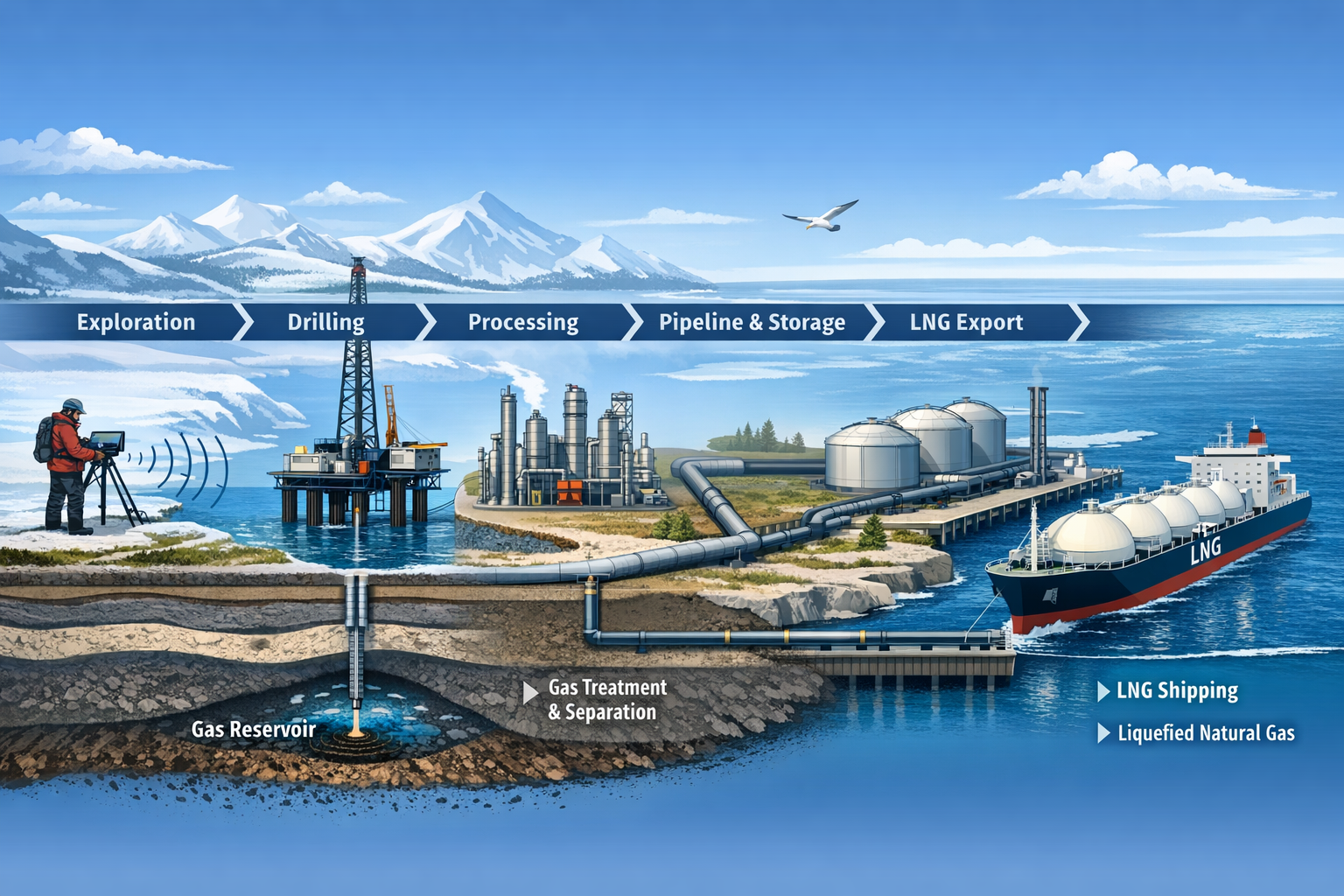 Natural gas extraction involves locating, drilling, and producing gas from underground reservoirs. The process is similar to oil extraction but includes additional technologies and infrastructure specific to gas production and transport.
Extraction can take place both onshore and offshore, including in remote Arctic environments.
Exploration and Assessment
Before drilling begins, potential gas reservoirs are identified using geophysical methods, such as seismic surveys. Once a potential site is identified, experts assess whether the resource is economically viable, taking into account factors such as size, accessibility, and market conditions.
This stage also includes environmental assessments and planning for infrastructure development.
Permits and Regulatory Framework
Gas extraction requires a range of permits and legal approvals before operations can begin. These may include:
- exploration and drilling licenses
- environmental approvals
- agreements for land use and infrastructure
In many cases, projects involve negotiations with landowners, Indigenous communities, or governments, often resulting in leasing agreements, royalties, or benefit-sharing arrangements.
Drilling and Production
Once approved, wells are drilled to reach the gas reservoir. Natural gas may occur:
- alongside oil (associated gas)
- in independent gas fields (non-associated gas)
- in coal formations (coalbed methane)
In some regions, unconventional gas resources, such as shale gas, are also developed using techniques like horizontal drilling and hydraulic fracturing, though these methods are less common in Arctic offshore environments.
Processing and Transport
After extraction, natural gas must be processed to remove impurities such as water, carbon dioxide, and sulfur compounds.
The gas is then transported to markets through:
- pipelines, which are the most common method
- liquefied natural gas (LNG), allowing transport by ship from remote areas
In Arctic regions, LNG has become increasingly important due to long distances and limited pipeline infrastructure.
Gas Extraction in the Arctic Today
Arctic gas extraction faces unique challenges, including:
- extreme weather conditions
- ice cover and seasonal access
- high infrastructure and operational costs
At the same time, technological advances have made it possible to develop large-scale gas projects in remote northern regions.
Looking Ahead
As global energy systems evolve, natural gas is often viewed as a transition fuel, helping reduce emissions compared to coal and oil. However, its future role is influenced by climate policy, environmental concerns, and the growing shift toward renewable energy.
In the Arctic, gas development is expected to continue in selected regions, but under increasing scrutiny regarding environmental impact and long-term sustainability.
Sources: EPA, Natural Gas, Columbia University