

Tidal Energy
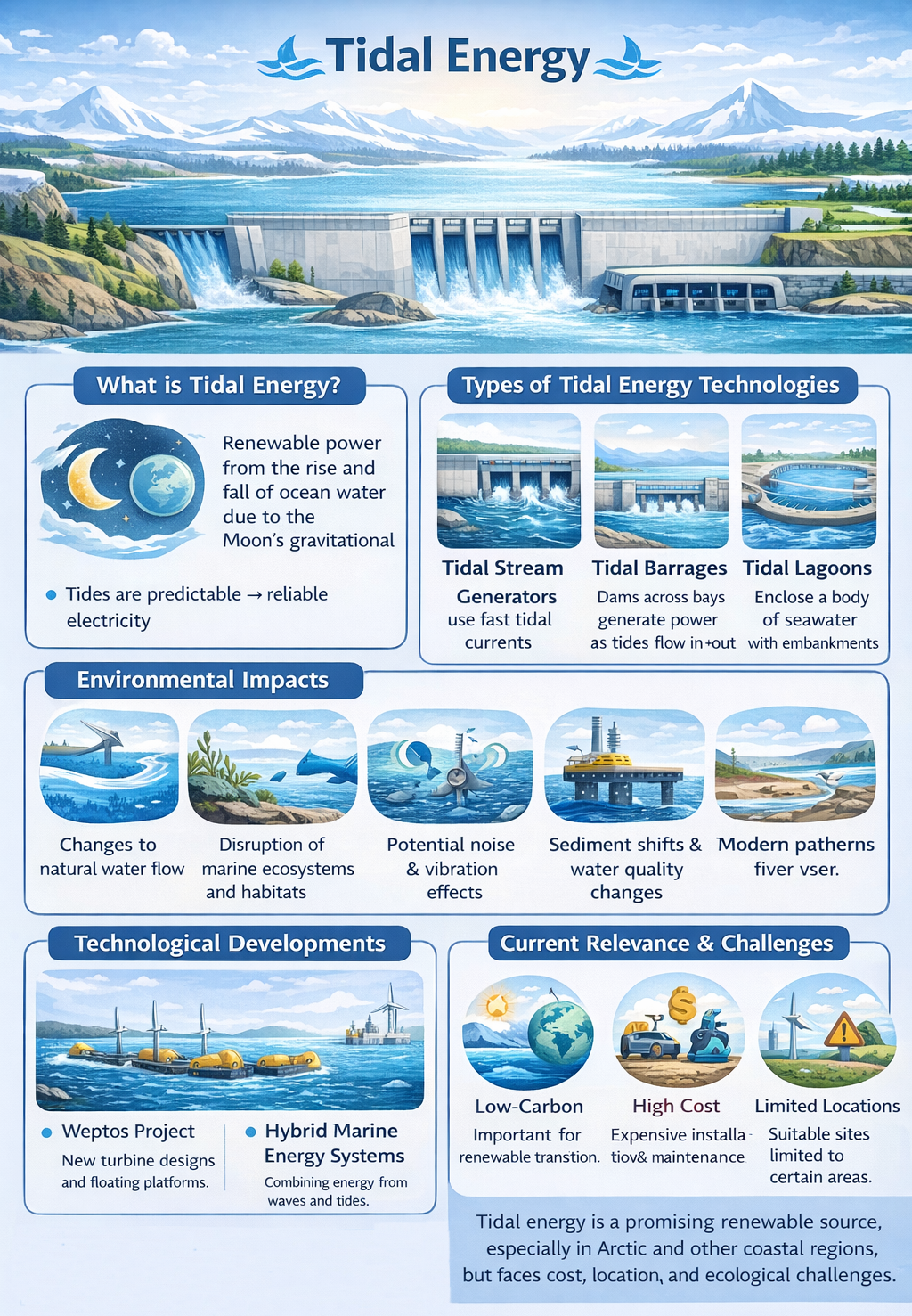 What is Tidal Energy?
Tidal energy is a renewable source of power generated from the rise and fall of ocean water caused by gravitational interactions between the Earth, the Moon, and the Sun. Because tides follow predictable lunar cycles, tidal energy is one of the most reliable and forecastable forms of renewable energy, with production levels that can be calculated years in advance.
Types of Tidal Energy Technologies
There are three main types of tidal energy generation:
1. Tidal Stream Generators (TSGs)
Tidal stream generators operate similarly to underwater wind turbines. They capture the kinetic energy of fast-moving tidal currents to generate electricity. These systems are considered one of the most environmentally friendly tidal technologies because they have relatively low visual and ecological impact.
Examples include pilot and demonstration projects in:
2. Tidal Barrages
Tidal barrages involve constructing a dam across a bay or estuary. Electricity is generated as water flows through turbines during both incoming (flood) and outgoing (ebb) tides. For this system to be effective, there must typically be a tidal range of at least 5–7 meters.
Examples:
- Bay of Fundy, Canada (one of the highest tidal ranges in the world)
- Kislaya Guba, Russia (Barents Sea)
3. Tidal Lagoons (Emerging Technology)
A more recent development is tidal lagoons, which enclose a body of seawater with walls or embankments. These systems aim to reduce environmental impacts compared to traditional barrages and are currently being explored in several countries.
Environmental Impacts
Although tidal energy is a low-carbon and renewable energy source, it can still have environmental consequences:
- Changes to natural water flow and tidal patterns
- Disruption of marine ecosystems and habitats, especially in estuaries
- Potential impacts from noise and vibration on marine life
- Sediment movement and water quality changes
Modern designs aim to minimize these impacts, but they remain an important consideration in project planning.
Technological Developments and Innovations
Recent advancements have improved the efficiency and feasibility of tidal energy. Projects such as the Danish “Weptos” wave and tidal system represent efforts to develop scalable and cost-effective solutions.
In addition, new turbine designs, floating platforms, and hybrid marine energy systems are being developed to increase energy output while reducing environmental impact and installation costs.
Current Relevance and Future Potential
Tidal energy is gaining renewed interest as part of the global transition to renewable energy. While it currently contributes a small share of global electricity production, its predictability and long-term potential make it an important emerging energy source.
Challenges remain, including:
- High installation and maintenance costs
- Limited suitable geographic locations
- Environmental concerns
However, continued technological innovation and policy support may expand its role in sustainable energy systems.