
News
EU Launches Review of Arctic Policy Amid Rising Climate and Security Concerns
The European Union has launched a public consultation to update its Arctic Policy, responding to growing environmental, geopolitical and economic challenges in the region.
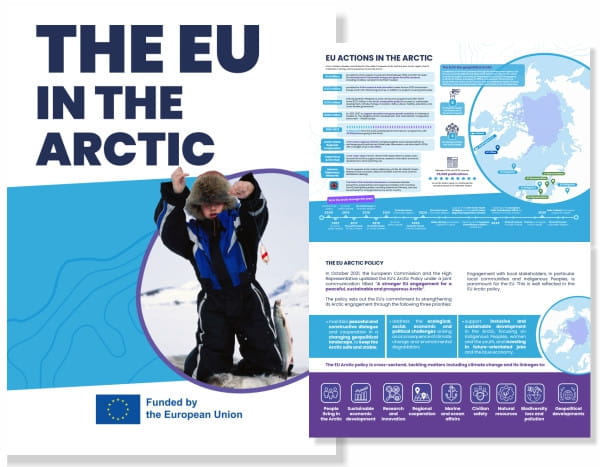 Originally adopted in October 2021, the EU’s Arctic Policy aims to promote a safe, stable, sustainable, peaceful and prosperous Arctic. The policy is built around three main priorities: protecting the climate and environment, supporting sustainable development, and promoting peace, stability and cooperation. It places strong emphasis on Indigenous Peoples, local communities and future generations.
While Arctic states hold primary responsibility for developments within their territories, the EU notes that many of the region’s challenges — particularly climate change — are cross-border in nature and require regional and multilateral cooperation.
Since the 2021 Joint Communication that set out the policy framework, significant environmental, security, economic and political changes have reshaped the Arctic landscape. Climate change continues to disproportionately affect Arctic inhabitants. At the same time, increased military presence and hybrid activities, driven by shifting geopolitical and geoeconomic dynamics, have raised new security concerns. Growing global interest in sustainable raw materials, energy resources and emerging trade routes has also created pressures on the region’s economic security, social balance and environmental stability.
In light of these developments, the European Commission will update the Arctic Policy in 2026. The revised policy will continue addressing climate action, sustainable development and scientific research, while also incorporating emerging priorities such as security, defence, connectivity and economic security.
As part of the review process,the Commission has opened a call for evidence and public consultation, running from 22 December 2025 to 16 March 2026 (midnight Brussels time). The initiative seeks diverse perspectives on key issues including climate change, environmental protection, sustainable development, security and international cooperation in the Arctic.
The Commission has encouraged stakeholders, businesses, researchers and citizens to submit feedback to ensure the updated policy remains relevant and effective in addressing the evolving challenges and opportunities facing the Arctic region.
The main legislative instrument guiding the initiative remains the 2021 Joint Communication, which will serve as the foundation for the forthcoming revision.
Source: European Commission
The tags below provide an opportunity to view previously posted related news within the selected category