
News
Calotte Academy 2026 Brings Global Debate on "Intelligence" to the Arctic
As artificial intelligence transforms societies and geopolitical tensions reshape international relations, a unique Arctic forum is preparing to explore one of the most important questions of our time: What does intelligence actually mean?
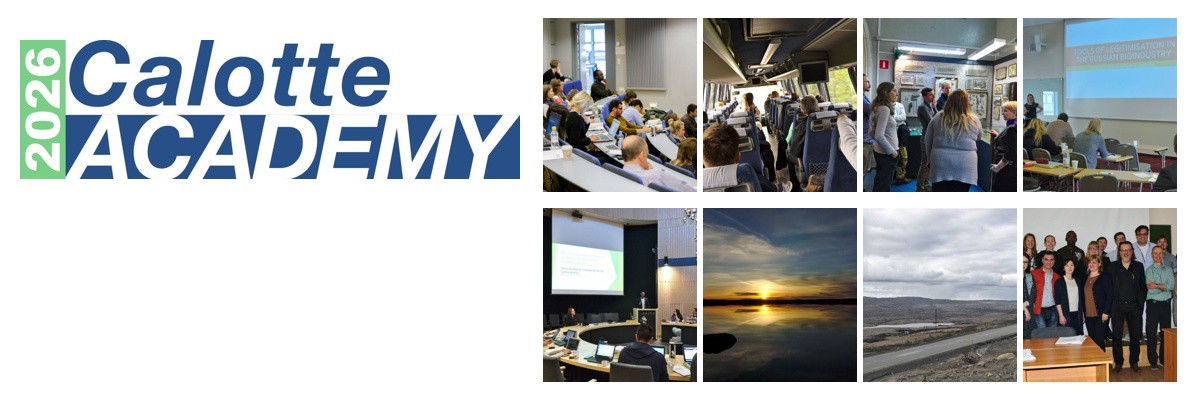
The Calotte Academy 2026, an annual traveling symposium known as the "School of Arctic Dialogue," will gather researchers, students, policymakers, and Indigenous knowledge holders from around the world for a week-long journey through the European Arctic from 8–14 June 2026. The event will travel across Finland, Sweden, and Norway, with sessions in Rovaniemi, Kiruna, Tromsø, Kautokeino, Hetta, Inari/Ivalo, and Sodankylä.
Founded as an interdisciplinary forum for Arctic studies, the Calotte Academy is far more than a traditional academic conference. Participants travel together through the region, combining field experiences, public discussions, scientific presentations, and policy dialogue. Organizers describe the Academy as a participatory "school of dialogue" that encourages collaboration between senior scholars and early-career researchers while fostering engagement with Arctic communities.
Intelligence Beyond Artificial Intelligence
The theme of the 2026 Academy, "Intelligence," was inspired by the growing prominence of artificial intelligence, but organizers deliberately adopt a broader interpretation.
"Intelligence" can refer to information, knowledge, cognitive ability, military and strategic intelligence, machine learning, Indigenous knowledge systems, or the institutions that collect and interpret information. The Academy aims to investigate how these different forms of intelligence interact—and sometimes compete—in an Arctic region increasingly shaped by climate change, technological development, and geopolitical uncertainty.
According to the organizers, today's global challenges are not only environmental and political crises but also crises of information, decision-making, and knowledge production. Questions surrounding AI, military security, scientific expertise, and Indigenous ways of knowing are becoming increasingly interconnected.
A Traveling School of Dialogue
One of the Academy's most distinctive features is its mobile format.
Participants will travel together through Sápmi—the traditional homeland of the Sámi people—experiencing Arctic environments and communities firsthand. The Academy's methodology rests on two principles: embodiment and dialogue.
The first emphasizes learning through direct experience and observation of Arctic realities. The second prioritizes discussion, with each presentation followed by extended periods for questions and debate. Organizers believe this structure helps bridge disciplinary, cultural, and political boundaries while encouraging genuine dialogue.
The program reflects the broad interpretation of intelligence. Sessions will address topics including:
- Arctic geopolitics and security
- Media narratives and information systems
- Indigenous knowledge and Sámi perspectives
- Artificial intelligence and environmental governance
- Climate change and sustainability
- Arctic resource governance
- Education and knowledge production
- Militarization and environmental security
Indigenous Knowledge at the Centre
A significant portion of the Academy focuses on Indigenous perspectives and Sámi knowledge systems.
Sessions in Kautokeino will explore how Indigenous knowledge contributes to Arctic governance, security, and environmental management. Researchers will examine questions of self-determination, participation in decision-making, and the role of Indigenous intelligence in shaping Arctic futures.
This emphasis reflects a growing recognition that Arctic governance involves not only scientific and technological expertise but also local and Indigenous ways of understanding environmental change and community resilience.
Learning Through Simulation
Beyond lectures and discussions, participants will engage in a role-play simulation titled "Who Owns Greenland in June 2026?"
The exercise is designed to recreate international negotiations involving Arctic states, Indigenous organizations, international institutions, and other stakeholders. By simulating real-world diplomatic challenges, participants will explore issues of Arctic governance, security, and cooperation while practicing negotiation and dialogue skills.
Building Arctic Cooperation in Uncertain Times
The Calotte Academy takes place at a time when the Arctic is increasingly at the centre of global attention. Melting sea ice, growing strategic competition, energy transitions, resource development, and emerging technologies are transforming the region.
Against this backdrop, the Academy seeks to provide a space for dialogue across disciplines, sectors, and national boundaries. Organizers argue that understanding the Arctic's future requires more than technological solutions or geopolitical analysis alone. It requires bringing together multiple forms of intelligence—from scientific research and policy expertise to Indigenous knowledge and lived experience.
Co-organized by the UArctic Thematic Network on Geopolitics and Security and the Northern Policy Society, the Academy includes partners from Finland, Sweden, Norway, Iceland, Belgium, and Canada.
As debates over AI, climate change, security, and knowledge become increasingly intertwined, the Arctic may prove to be one of the most important places to ask what intelligence means—and how it can be used to navigate an uncertain future.
Read the booklet about the project.
Source: Calotte Academy
Related news:
The tags below provide an opportunity to view previously posted related news within the selected category