
News
B.C. Court of Appeal Confirms UNDRIP Has Immediate Legal Effect in Landmark Indigenous Rights Ruling
In a landmark decision with far-reaching implications for Indigenous rights and resource development in Canada, the British Columbia Court of Appeal has ruled that the United Nations Declaration on the Rights of Indigenous Peoples (UNDRIP) forms part of British Columbia and Canadian law and carries immediate legal effect.
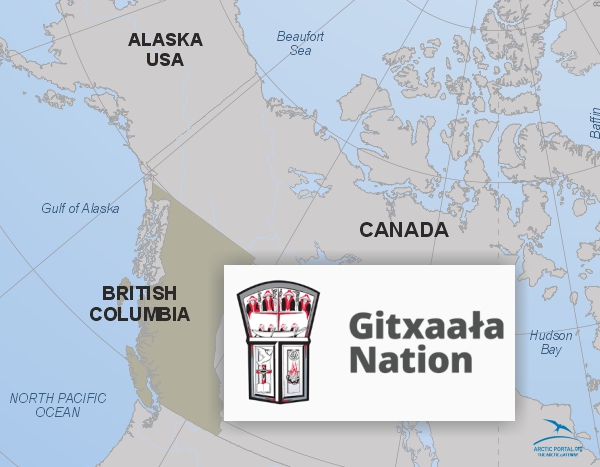 The decision, released on December 5, 2025, in Gitxaala v. British Columbia (Chief Gold Commissioner), marks a major victory for Indigenous Nations. The Court concluded that B.C.’s mineral claim regime is inconsistent with UNDRIP because it allows mineral claims to be staked without consultation with affected Indigenous peoples.
A Challenge to B.C.’s Mineral Claim System
The case arose from a legal challenge brought by Gitxaala Nation and Ehattesaht First Nation, who argued that B.C.’s longstanding “free entry” mineral tenure system violates both the constitutional duty to consult and Indigenous rights affirmed in UNDRIP. While the B.C. Supreme Court previously found the regime inconsistent with the duty to consult, it held that UNDRIP was not part of B.C. law and that courts could not assess whether provincial laws complied with it.
Gitxaala and Ehattesaht appealed that decision. On appeal, the Court of Appeal rejected the lower court’s reasoning, finding that UNDRIP is legally relevant and that courts do have jurisdiction to determine whether provincial laws are consistent with it.
UNDRIP as Part of B.C. and Canadian Law
In a majority decision, the Court of Appeal held that B.C.’sDeclaration on the Rights of Indigenous Peoples Act incorporates UNDRIP into provincial law with immediate legal effect. While the Act does not create new standalone rights, UNDRIP now serves as a binding interpretive framework and establishes the “minimum standards” against which B.C. laws must be measured.
The Court further found that both provincial and federal legislation trigger a presumption of conformity, meaning that laws must be interpreted consistently with UNDRIP unless there is clear legislative intent to the contrary. Importantly, the Court recognized that UNDRIP has also been incorporated into Canadian law through federal legislation, making it a “weighty source” for interpreting laws across the country.
The Court emphasized that UNDRIP contains a mix of binding international rights, general principles, minimum standards and aspirational goals. As a result, whether a particular law complies with UNDRIP will need to be assessed on a case-by-case basis, depending on the nature and legal status of the specific UNDRIP provision at issue.
International Law and Indigenous Rights
The majority also confirmed that certain UNDRIP rights, including the right to self-determination and, more broadly, rights related to land and consultation, have independent status under international law, including customary international law and binding treaties. These rights therefore attract the common law presumption of conformity even in provinces and territories without UNDRIP legislation.
This finding means that courts across Canada must presume laws are consistent with these core Indigenous rights unless legislatures explicitly state otherwise.
Accountability and the Honour of the Crown
Beyond the courtroom, the decision carries significant implications for government action. The Court held that B.C.’s Declaration Act contains a binding Crown promise to act consistently with UNDRIP. As a result, provincial officials are required to diligently work toward aligning laws and practices with UNDRIP, in accordance with the honour of the Crown.
This obligation applies not only in litigation, but also in day-to-day decision-making, including how the duty to consult is interpreted and implemented.
Mineral Claims Found Inconsistent with UNDRIP
Applying these principles, the Court declared that B.C.’s mineral claim regime is “manifestly inconsistent” with UNDRIP, particularly Article 32(2), which affirms Indigenous peoples’ right to be consulted regarding projects affecting their lands and territories. The absence of consultation at the mineral claim stage was found to be incompatible with these standards.
The ruling
The ruling represents a significant step forward in the recognition and enforcement of Indigenous rights in Canada. While the Court left open key questions, including whether the right to free, prior and informed consent (FPIC) constitutes a binding international legal obligation, it clearly established that UNDRIP is not merely symbolic, but legally meaningful.
The decision is expected to have wide-ranging impacts on resource development, government decision-making and legal practice, requiring greater engagement with international law and Indigenous legal orders.
Congratulations have been extended to Gitxaala Nation for this historic victory, which affirms Indigenous law and strengthens accountability under UNDRIP in British Columbia and beyond.
Source: Gitxaala Nation, Olthuis Kleer Townshend - LLP, Ecojustice Canada,
The tags below provide an opportunity to view previously posted related news within the selected category