
Animals and Plants
In this section, you can explore how wildlife and vegetation have adapted to Iceland’s unique Arctic environment. The island is shaped by harsh weather conditions, volcanic landscapes, and extreme seasonal variations in daylight, all of which influence the survival strategies of its ecosystems.
Plant life is relatively limited, yet resilient species such as mosses, lichens, grasses, and hardy shrubs thrive in volcanic soil and cold temperatures, playing a key role in stabilizing fragile environments.
Animal life reflects a similar pattern of adaptation. While terrestrial mammals are few and often introduced by humans, Iceland is surrounded by rich marine ecosystems that support seabirds, fish, and marine mammals, making the surrounding ocean far more biodiverse than the land itself.
Education material in slideshow format with information text about Arctic animals and plants.

The common minke whale is the smallest species among the rorquals and the second smallest of all baleen whales. These gentle, curious, and intelligent marine mammals are known for their agility and adaptability.
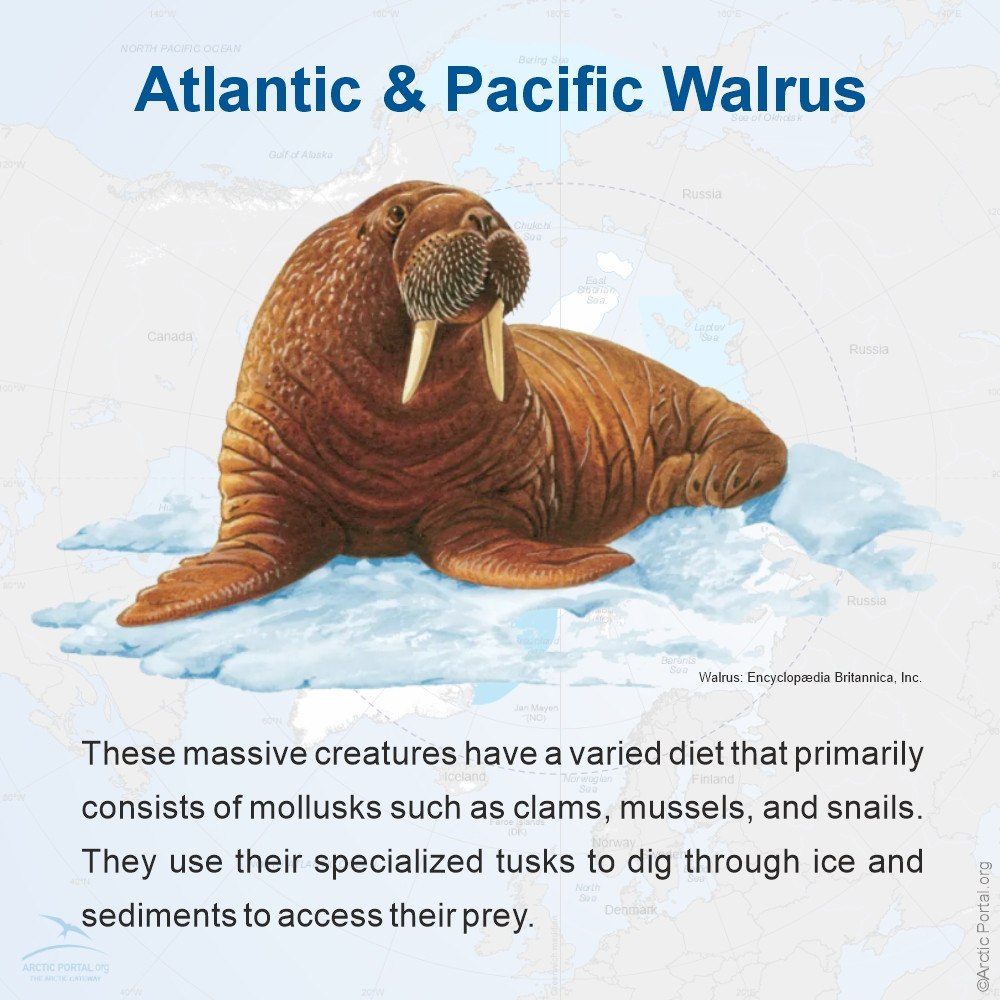
These massive creatures have a varied diet that primarily consists of mollusks such as clams, mussels, and snails. They use their specialized tusks to dig through ice and sediments to access their prey.

Narwhals have no teeth in their mouth, unlike toothed whales. Instead, male narwhals boast a singular elongated tooth, often referred to as a tusk, extending a remarkable two to three meters from the upper left jaw.

The fin whale is the second-largest whale species and mammal on Earth, behind the blue whale.

Graceful inhabitants of the Arctic and sub-Arctic oceans, beluga whales are gentle creatures, also know as "sea canaries" due to their melodic vocalizations.

The Bowhead whale or Greenland right whale thrives in the icy waters of the Arctic and sub-Arctic regions. This marine giant is not a social animal, typically travelling alone or in small pods of up to six.
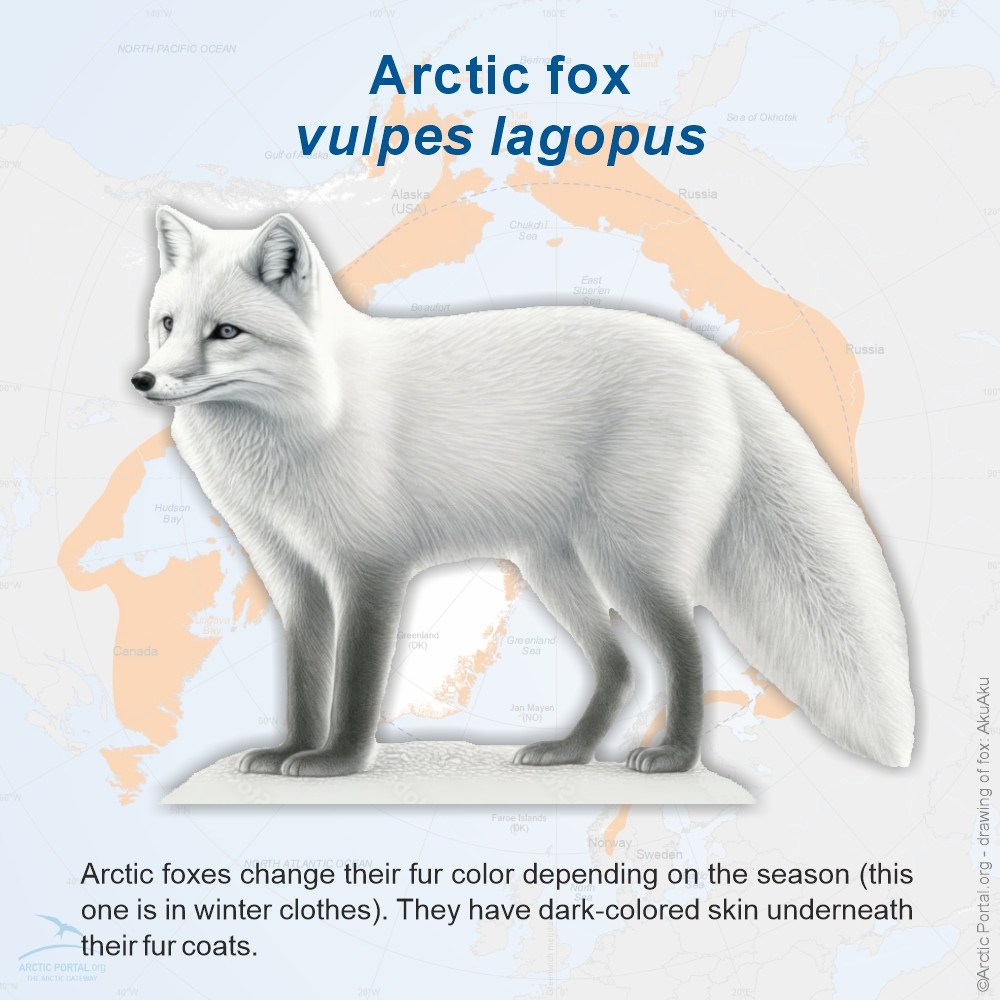
Arctic foxes change their fur color depending on the season (this one is in winter clothes). They have dark-colored skin underneath their fur coats.
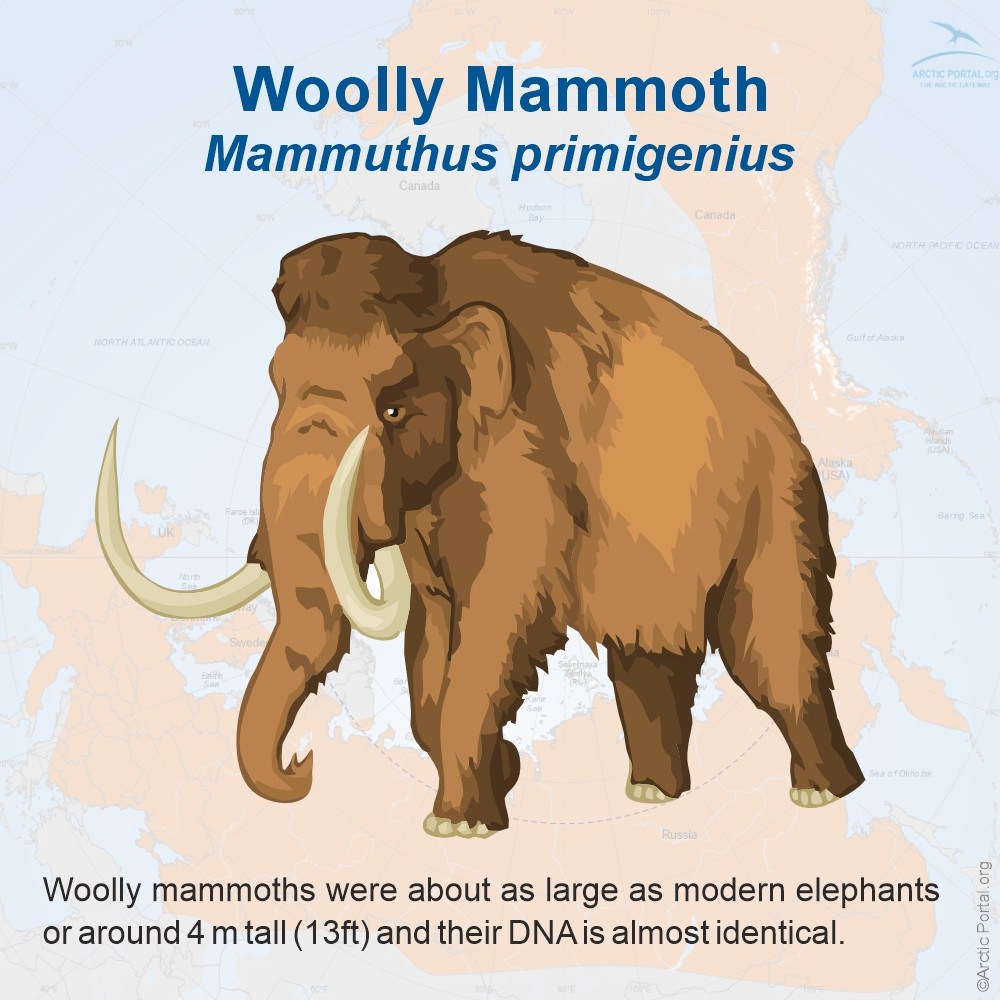
Woolly mammoths roamed the cold tundra of Europe, Asia, and North America from about 300,000 years ago up until about 10,000 years ago, apart from the ones surviving longer on Wrangel Island (Russia).

The polar bear is a white bear inhabiting the Arctic region. With the Kodiak bear (brown bear), it holds the title of the largest and most powerful carnivore on land. It has no natural predators and is unafraid of humans making it an exceptionally dangerous creature.
Arctic Portal.org - 2026 © All rights reserved.
When quoting, reusing or copying any material on the arcticportal.org or any of its sub-sites including but not limiting to: information, news, articles, data, maps or images, in part or in full, a citation stating the origin and a hyperlink to www.arcticportal.org is required.