
Permafrost Coastal Erosion
Permafrost Coastal Erosion
Description
Coastal erosion is the gradual loss of land and sediment along coastlines, a phenomenon prevalent in the Arctic due to a mix of thermal and mechanical drivers.
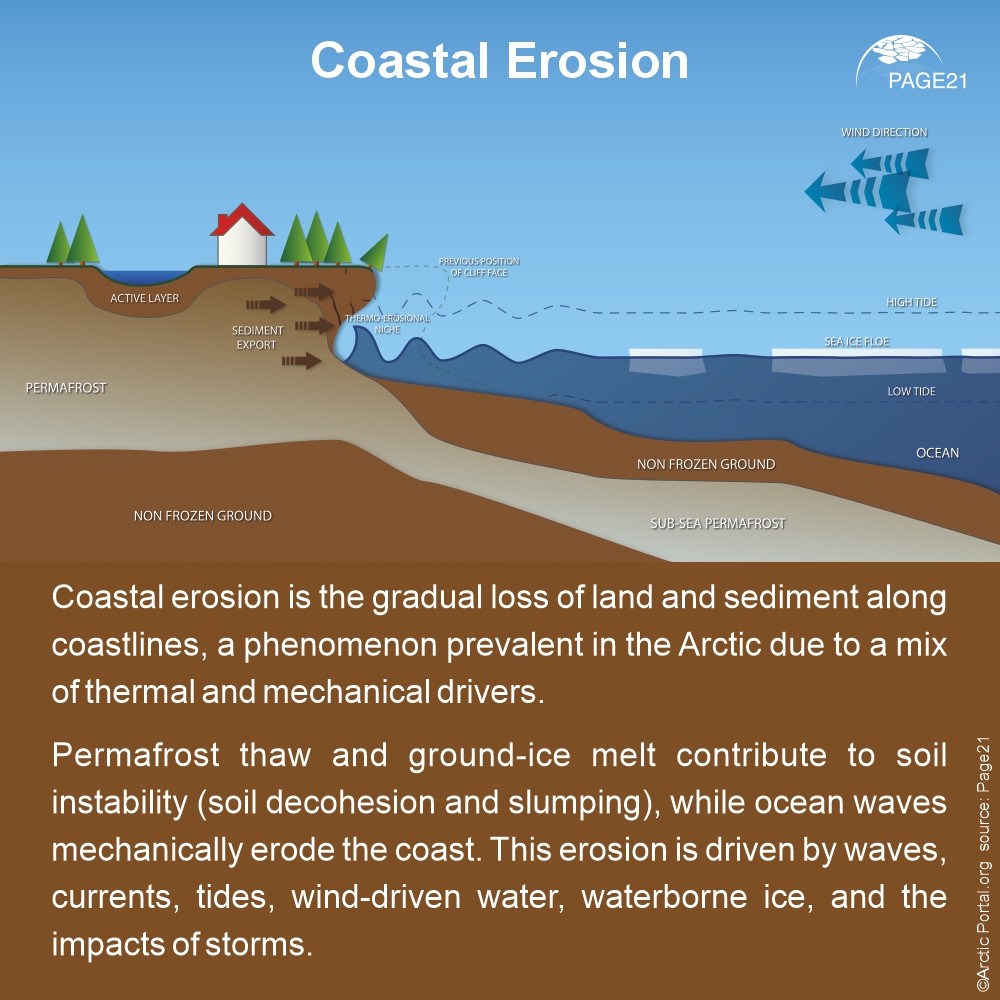
Coastal erosion is the gradual loss of land and sediment along coastlines, a phenomenon prevalent in the Arctic due to a mix of thermal and mechanical drivers.
Permafrost thaw and ground-ice melt contribute to soil instability (soil decohesion and slumping), while ocean waves mechanically erode the coast. This erosion is driven by waves, currents, tides, wind-driven water, waterborne ice, and the impacts of storms.
Main Factors
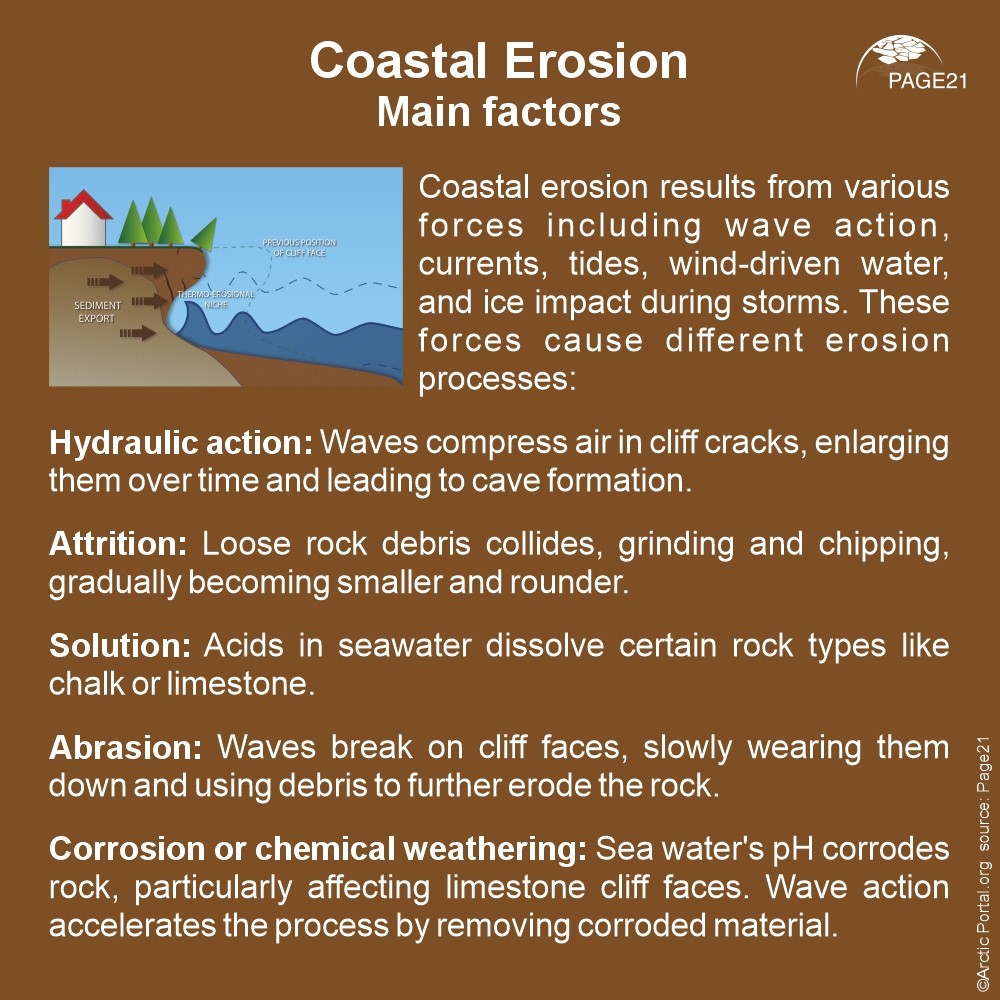
Coastal erosion results from various forces including wave action, currents, tides, wind-driven water, and ice impact during storms. These forces cause different erosion processes:
Hydraulic action: Waves compress air in cliff cracks, enlarging them over time and leading to cave formation.
Attrition: Loose rock debris collides, grinding and chipping, gradually becoming smaller and rounder.
Solution: Acids in seawater dissolve certain rock types like chalk or limestone.
Abrasion: Waves break on cliff faces, slowly wearing them down and using debris to further erode the rock.
Corrosion or chemical weathering: Sea water's pH corrodes rock, particularly affecting limestone cliff faces. Wave action accelerates the process by removing corroded material.
How to prevent
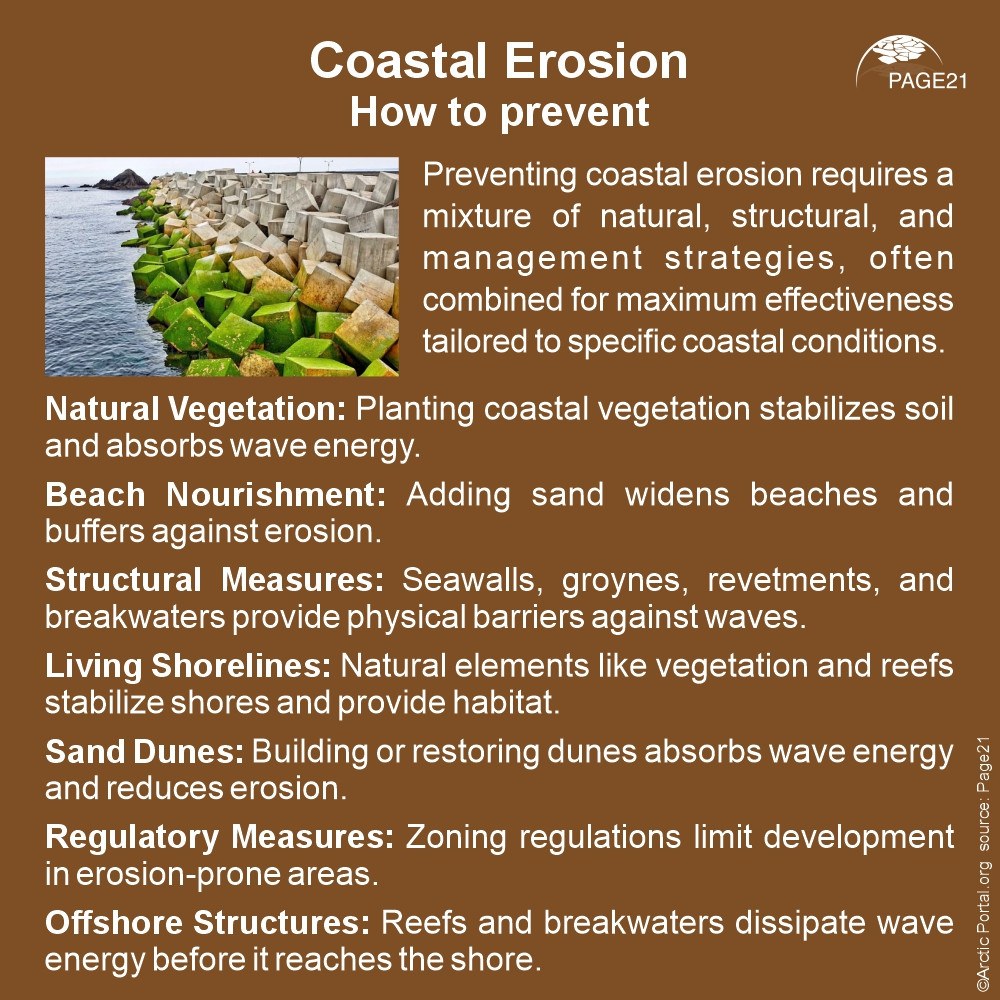
Preventing coastal erosion requires a mixture of natural, structural, and management strategies, often combined for maximum effectiveness.
Natural Vegetation: Planting coastal vegetation stabilizes soil and absorbs wave energy.
Beach Nourishment: Adding sand widens beaches and buffers against erosion.
Structural Measures: Seawalls, groynes, revetments, and breakwaters provide physical barriers against waves.
Living Shorelines: Natural elements like vegetation and reefs stabilize shores and provide habitat.
Sand Dunes: Building or restoring dunes absorbs wave energy and reduces erosion.
Regulatory Measures: Zoning regulations limit development in erosion-prone areas.
Offshore Structures: Reefs and breakwaters dissipate wave energy before it reaches the shore.
Visit our Map Gallery Arctic Portal specializes in creating customized graphical maps that cover a range of significant Arctic topics with global recognition. We are continuously working on new maps and adding them to our Gallery.
License
Arctic Portal.org - 2026 © All rights reserved.
When quoting, reusing or copying any material on the arcticportal.org or any of its sub-sites including but not limiting to: information, news, articles, data, maps or images, in part or in full, a citation stating the origin and a hyperlink to www.arcticportal.org is required.