
News
Preservation of Indigenous Languages
Indigenous languages are a cornerstone of Arctic cultures, carrying knowledge, history, and relationships with the land that have been shaped over thousands of years. Across the Arctic, many of these languages now face serious challenges as social, environmental, and technological changes accelerate. Despite global challenges, there are still efforts that have continued, demonstrating a sustained commitment to ensuring that Arctic Indigenous languages remain accessible to future generations.
The Arctic Council’s Sustainable Development Working Group (SDWG) responded to this crisis by harnessing technology to document, preserve and make Indigenous languages accessible to all generations. Its Digitalization of the Linguistic and Cultural Heritage of Indigenous Peoples of the Arctic project, which is an ungoing Arctic Council project, is led by the Russian Federation, Norway and the Russian Association of Indigenous Peoples of the North (RAIPON), one of the Permanent Participants of the Arctic Council. The following article, written by contributors from the Arctic Council’s Sustainable Development Working Group and partner institutions, highlights how digital tools and international cooperation are being used to support the preservation and revitalization of Arctic Indigenous languages, bridging spoken traditions with the digital world.
Safeguarding Arctic Indigenous Languages
Article by: Kimberly Aiken, Sustainable Development Working Group / Trond Trosterud, UiT - the Arctic University of Norway / Mikhail Pogodaev, Ministry of Arctic for Development and Indigenous Peoples Affairs, Sakha Republic / Anatoly Zhozhikov, UNESCO Department at North-East Federal University
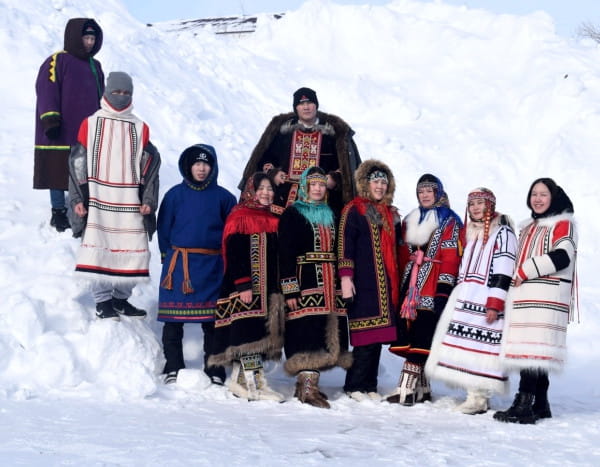
Language is more than a tool for communication; it’s the heart of culture, the vessel of history, and the foundation of identity. For Indigenous Peoples of the Arctic, language weaves together the knowledge of ancestors, the rhythms of the land and the spirit of resilience in the face of rapid change. Each word carries centuries of wisdom—stories of survival, traditions of stewardship and unique worldviews that cannot be translated with mere vocabulary. Yet, these languages, once passed seamlessly through generations, now face an unprecedented threat of extinction.
Digitalization as a Bridge Between Generations
The rapid development of the Internet has triggered the creation of social networks, resulting in a new virtual multicultural environment, in which there are no borders, distances or time constraints and in which it’s possible to communicate in almost any language of the world. This digital environment offers tremendous opportunities, including freedom of expression, education, preservation and development of languages, culture and spirituality. However, to be present in this new environment and to benefit from digitalization, languages and cultures need to have access to the appropriate tools and resources, including proofing tools, keyboards, letter representation – and not least knowledgeable writers.
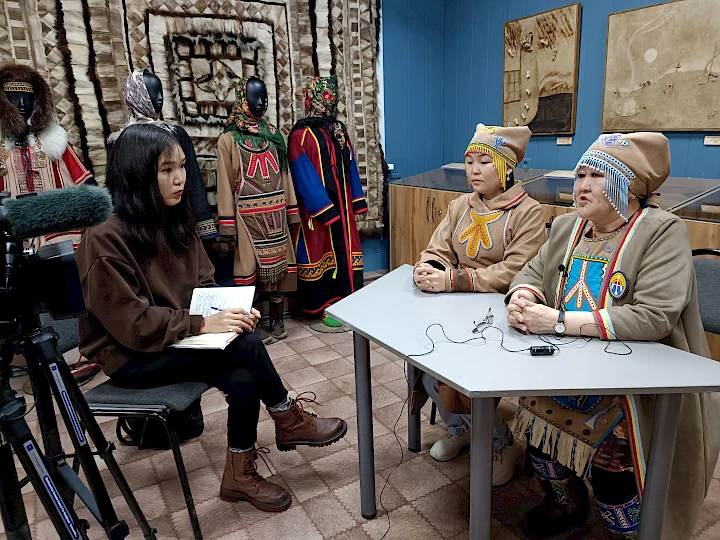 The Arctic is home to over 40 unique Indigenous languages and Indigenous Peoples are the creators and custodians of these rich oral traditions reflecting the diverse cultures and communities of the region. For many centuries they have mastered the Arctic landscapes, adapted to extreme natural and climatic conditions, developed distinctive cultures and lived in harmony with nature. These languages are therefore embedded in traditional ecological knowledge, storytelling and intergenerational teachings.
However, globalization, anthropogenic and technogenic impacts on the environment and active industrial development are having a profound impact on the traditional way of life of Arctic Indigenous Peoples, risking complete assimilation and loss of cultures, ways of life and languages. As fluent speakers age, fewer young people are learning their ancestral tongues, threatening the loss of cultural heritage that has sustained Arctic communities for millennia.
It’s therefore necessary to pay attention to these processes and to intensify activities to preserve and develop languages and traditional culture. At the present stage, digital technologies such as the Internet, GIS and mobile communications can play an important role in the preservation and development of the languages and cultures of Arctic Indigenous Peoples.
Furthermore, the United Nations declared 2022–2032 as the International Decade of Indigenous Languages in an effort to revitalize and safeguard linguistic diversity worldwide. This decade-long initiative underscores the vital role language plays in upholding human rights, self-determination, Indigenous empowerment, and sustaining traditional lifestyles that are inextricably linked to cultural, spiritual and social practices and connections to the land and its ecosystems.
 A Project Leading the Way
The Arctic Council’s Sustainable Development Working Group (SDWG) responded to this crisis by harnessing technology to document, preserve and make Indigenous languages accessible to all generations. Its Digitalization of the Linguistic and Cultural Heritage of Indigenous Peoples of the Arctic project is led by the Russian Federation, Norway and the Russian Association of Indigenous Peoples of the North (RAIPON), one of the Permanent Participants of the Arctic Council.
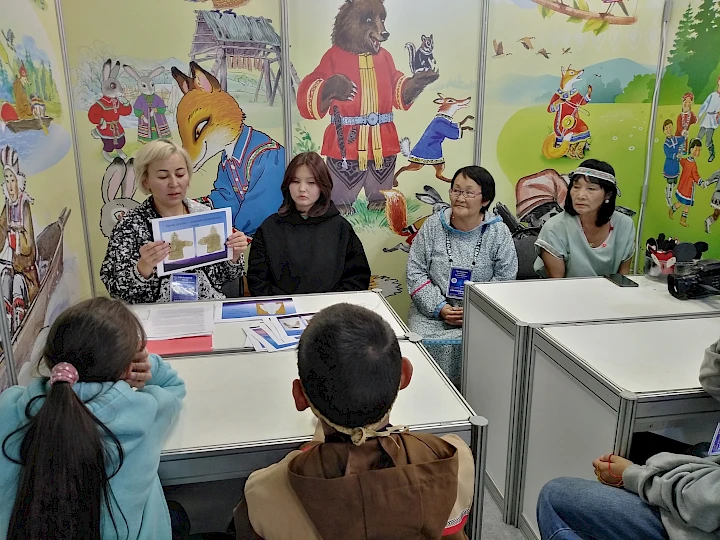
Through innovative collaborations with Indigenous Knowledge Holders, linguists and digital experts, the project developed tools such as language-learning apps, digital dictionaries and online storytelling platforms, such as the Arctic Multilingual Portal. This digital knowledge hub provides text, audio and video materials on circumpolar languages. These resources reflect the lived experiences and knowledge systems of Arctic Indigenous Peoples and ensure that Indigenous languages continue to thrive in a modern world, empowering Indigenous youth to reclaim their heritage in ways that resonate with their digital realities.
The project was developed by the UNESCO Chair on Social and Human Adaptation of the Arctic regions to Climate Change of the M.K. Ammosov North-Eastern Federal University in the Republic of Sakha, Yakutsk, in collaboration with institutions such as the International Institute of Reindeer Husbandry, UiT - the Arctic University of Norway and RAIPON.
The project aims to create an international, multicultural internet portal on the languages, culture and food heritage of Indigenous Peoples of the Arctic and over the past years, it has completed several taskings: developing a project action plan (December 2021 to January 2022), conducting expeditions for data collection and content creation (January 2022 – December 2023), and maintaining the project portal and disseminating the results (January 2024 to December 2024).
At the initial stage of the project, it was decided to choose the Republic of Sakha (Yakutia) as a pilot region, where five Indigenous Peoples of the Arctic live (Even, Evenki, Yukagir, Chukchi and Dolgans), with further plans to implement the project throughout the Russian Federation.
A Language Preservation Expedition
To fulfil the project goal, expeditions were organized to the places of traditional residence of Indigenous Peoples of the North: 1) in the following districts of the Republic of Sakha (Yakutia): Momsky, Allaihovsky, Oleneksky, Srednekolymsky, Oymyakonsky and Neryungrinsky (Iengra); 2) Chukotka Autonomous Okrug; 3) Krasnoyarsk Krai, Taymyrsky Dolgano-Nenetsky District; 4) Khabarovsk Krai. Within the framework of these expeditions, recordings were made of more than 100 speakers of the Indigenous languages. The recorded informants are representatives and keepers of the culture and language of the Even, Evenki, Yukagir, Nenets, Nganasan, Dolgan,Chukchi, Enets and others (the bolded text leads to informative Arctic Portal´s quick-facts) .
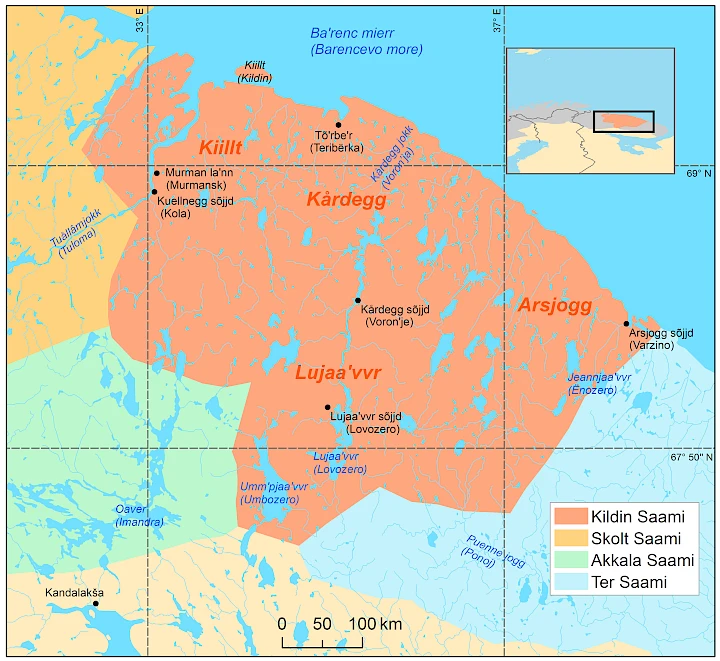 A major milestone of the project was the creation of an online educational resource, the main result of which is a GIS map of the languages of Indigenous Peoples of the Arctic, visually representing linguistic diversity and fostering awareness of endangered languages. An initiative developed in collaboration with institutions such as The University of the Arctic, UiT - Arctic University of Norway and the University of Alaska, Fairbanks.
Currently, the project is encoding grammar into models for digital text processing of Kildin Sámi and Mansi. While, in the Russian Federation, the M.K. Ammosov North-Eastern Federal University (NEFU) in cooperation with the Federal Service for State Registration, Cadaster and Cartography (Rosreestr) is creating a GIS map of Arctic Indigenous languages – with the aim to integrate both GIS maps to fully grasp the project’s circumpolar scope.
Despite global challenges, efforts to support the digitalization of Arctic Indigenous languages has continued. While project implementation within the Arctic Council framework was temporarily paused, important progress was made within the Russian Federation, home to 40 Indigenous Peoples of the North, Siberia and the Far East. These efforts highlight the ongoing commitment to preserving and revitalizing Indigenous languages through digital tools, ensuring that linguistic heritage remains accessible for future generations.
 The Human Journey to Revitalize Indigenous Language with the Arctic Council
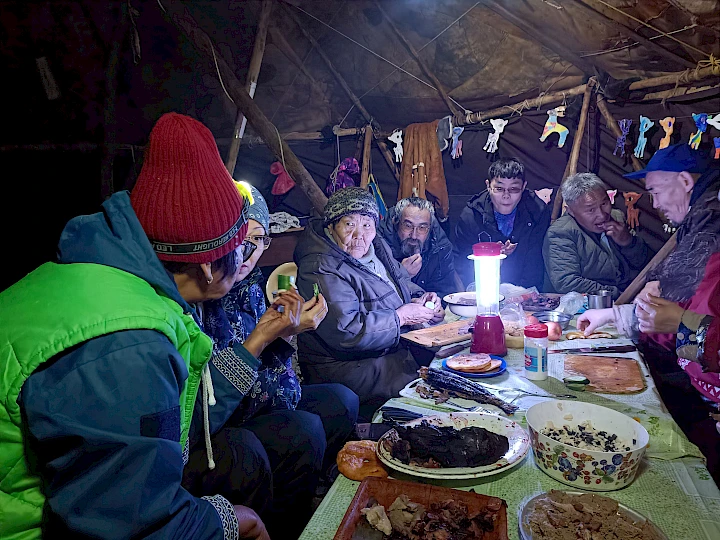
The revitalization of Arctic Indigenous languages is not just a project—it’s a journey undertaken by individuals, families and entire communities. This journey is deeply personal, as it represents the reconnection to linguistic roots that have been threatened by historical disruptions. Indigenous youth, Elders, linguists and educators are all part of this movement, working together to reclaim, strengthen and safeguard their languages for generations to come.
At the core of this journey are the Elders and youth, with Elders preserving the ancestral knowledge and linguistic traditions that define Indigenous cultures, while the youth are now carrying these traditions forward in innovative ways. Through storytelling, song and oral traditions, Elders pass down the spirit of their languages to younger generations, who in turn, are embracing language-aware digital tools to learn and practice their native tongue through creative and digital expression merging tradition with technology.
 New Tools for Old Languages
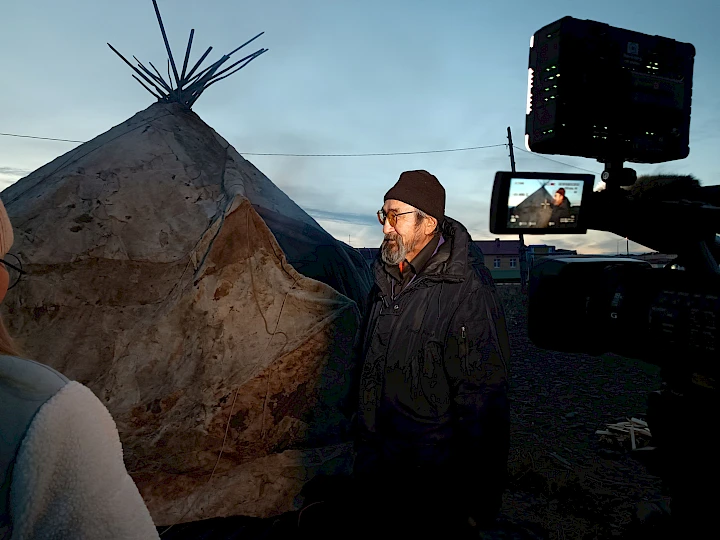
The SDWG project is invaluable to Indigenous identity and the exchange between Elders and youth harnessing best practices for engagement with the use of traditional languages both in the field and Indigenous communities at large. The project is working on language technology development, including the creation of keyboards, grammatical models and proofing tools. These innovations enable digital communication and literacy, ensuring that these languages can be actively used in modern technology.
SDWG’s efforts, combined with the ambition of Arctic Indigenous Peoples, demonstrate that language revitalization is more than preservation—it’s an ongoing human journey of cultural survival, identity and renewal.
In the long term, it’s planned to carry out this work throughout the Russian Federation, where 40 Indigenous Peoples live, and the aim is to integrate the project with that of Norwegian colleagues, who have the required language infrastructure ready.
A Legacy for Future Generations
As the world advances into an increasingly digital era, it’s crucial that Indigenous languages do not remain trapped in the pages of history but evolve alongside technology. The language digitalization project is not just about preservation; it’s about creating a sustainable linguistic future where Arctic Indigenous voices remain strong, audible and respected.
Language is more than words—it’s identity, belonging and the essence of what it means to be Indigenous in the Arctic. SDWG, in collaboration with Indigenous Permanent Participants, is ensuring that Arctic languages are not just remembered but lived.
About the Project
The Arctic Council’s Digitalization of Linguistic and Cultural Heritage of the Indigenous Peoples of the Arctic Project is dedicated to safeguarding and revitalizing Indigenous languages, traditional knowledge, and cultural heritage—including food traditions—as essential pillars of local economies and resilience in the face of Arctic change. By harnessing modern digital technologies, the project aims to develop a multilingual online portal featuring a GIS map and an Indigenous knowledge database, ensuring that vital linguistic and cultural resources remain accessible for future generations.
Key Objectives:
Conducting expeditions and community-based workshops to document Indigenous languages and traditional cultural knowledge firsthand.
- Interviewing and recording language keepers and cultural custodians to preserve oral traditions.
- Collecting historical materials from state and private archives on language, culture, and food heritage.
- Showcasing Indigenous Peoples of the Arctic on the Arctic Multilingual Portal (www.arctic-megapedia.com), a global platform for Arctic languages, culture, and food heritage.
- Creating a GIS map of Arctic Indigenous communities.
- Engaging Arctic Indigenous youth in digital language and heritage preservation efforts.
The project also seeks to enhance digital accessibility for Indigenous languages through:
- Developing keyboard layouts compatible with modern smartphones and computers for circumpolar Indigenous languages of Russia.
- Creating grammatical models and proofing tools for languages with available linguistic resources, ensuring they can thrive in written and digital contexts.
- Laying the groundwork for future machine translation projects, supporting linguistic diversity in digital spaces by developing syntax and lexical transfer components for Indigenous languages.
Through these initiatives, the project will provide the language communities involved with the prerequisites for using their language in digital contexts, as written languages in a modern world. The project will also strengthened Indigenous language use in digital environments, fostering cultural continuity while providing the tools necessary for adaptation in an evolving Arctic. In a longer perspective it also lays the foundation for a follow-up project for machine translation from minority languages to Russian, with minority language syntax and components for syntactic and lexical transfer being the missing components.
Source: Arctic Council , Pathways (Arctic Council Magazine)
Related sources & quick-facts:
Arctic Multilingual Portal now open!
People & Culture - quick-facts
The tags below provide an opportunity to view previously posted related news within the selected category