
International Polar Years and International Geophysical Year
The International Polar Years (IPYs), together with the International Geophysical Year (IGY), were projects that brought together scientists from all over the world to coordinate Arctic and Antarctic (as well as other) research efforts. Each one took place in a different historical, political, and scientific context, but each also marked a step forward in the international cooperation of science, polar and not.
From the first coordinated observations in 1882–1883 to the extensive research programmes of recent decades, these initiatives have deepened our understanding of the polar regions and their connections to the wider planet. By sharing observations, methods and expertise across national borders, researchers have investigated everything from weather and magnetism to ice, oceans and life in polar environments. Their legacy includes valuable scientific records, lasting research partnerships and a foundation for understanding environmental change.
The Fifth International Polar Year, which is planned for 2032-2033, seeks to build on this tradition.
Fifth International Polar Year (planned for 2032-2033)

Currently, the polar regions are experiencing some of the most rapid and far-reaching environmental changes on Earth. Climate change affects them more than other regions and changes underway in the Arctic and Antarctic are already influencing sea-level rise, water security, food systems, biodiversity, infrastructure, economic development and human well-being. At the same time, major uncertainties remain regarding future impacts, risks, and opportunities.
The Fifth IPY aims to bring together scientists, policymakers, Indigenous Peoples and local communities, to face those uncertainties collaboratively. Across its planning, project, implementation and legacy phases, countries, institutions, networks and communities will work together to strengthen observations, coordinate research and infrastructure, share expertise and develop the knowledge needed to better understand and anticipate Earth-system change. Through knowledge co-production, shared observations and sustained collaboration, as well as new developments in modern technology, the project looks to generate trusted knowledge that supports informed decision-making, adaptation, preparedness, risk reduction and sustainable development.
In many ways, the Fifth IPY has already started. The main organizers are
- the International Arctic Science Committee (IASC),
- Scientific Committee on Antarctic Research (SCAR),
- International Science Council (ISC) and
- World Meteorological Organization (WMO).
It has been announced that Norway will host the International Coordination Office (ICO) in Tromsø, in partnership with the Republic of Korea and Chile, who will host regional offices that will work as part of the ICO as a single coordinating body.
Fourth International Polar Year (2007-2008)
Championed by the International Council for Science and the World Meteorological Organization, as well as the International Arctic Science Committee (IASC) and the Science Committee on Antarctic Research (SCAR) the Fourth IPY was chosen to happen on the fiftieth anniversary of the IGY. It took place in a very different context than its predecessors, with the understanding of what the polar regions were, what they had to offer and what threatened them, shifting. The end of the Cold War brought new circumstances for international scientific co-operation. Climate impact studies became a priority through the 1990s and 2000s, as well as the impact of a changing climate on the people and communities that lived in the Arctic, and even those all around the world. The core message of the project was “What happens at the poles affects us all.”
The Fourth IPY attracted the involvement of more than 60 countries, and 228 international IPY projects took place with many more related national ones. The scope of research was expanded from the geophysical and meteorological focus of the previous IPYs and IGY to include biology as well as social sciences and humanities. Research itself was structured around six themes instead of individual disciplines.
The themes were:
- Status: to determine the environmental status of the polar regions;
- Change: to quantify, and understand, past and present natural environmental and social change in the polar regions; and to improve projections of future change;
- Global Linkages: to advance understanding on all scales of the links and interactions between polar regions and the rest of the globe, and of the processes controlling these;
- New Frontiers: to investigate the frontiers of science in the polar regions;
- Vantage Point: to use the unique vantage point of the polar regions to develop and enhance observatories from the interior of the Earth to the Sun and the cosmos beyond;
- Human Dimension: to investigate the cultural, historical, and social processes that shape the sustainability of circumpolar human societies, and to identify their unique contributions to global cultural diversity and citizenship.
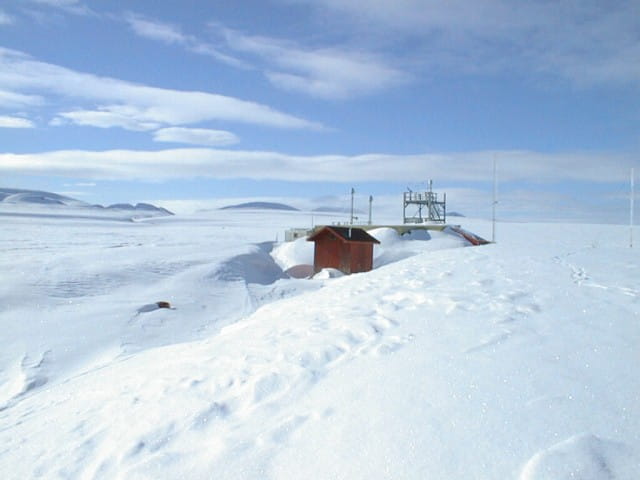
Technological developments have changed research drastically compared to the past. Navigation, data management and communication were much easier thanks to GPS, GIS and geoinformatics, as well as satellite telephones and many others.
This offered many new opportunities for computer-based analysis and prediction, which in turn made the research conducted even more valuable.
Understanding the polar regions increased massively thanks to the Fourth IPY. It revealed the extent of the impact climate change was having, from the link between reductions in sea ice and weather and climate in lower latitudes to the changes in fauna and flora of the polar regions.
Scientific understanding of the connection of the polar regions to the rest of the planet also increased. The legacy of the project was also the new generation of polar researchers as well as heightened public awareness.
International Geophysical Year / Third IPY (1957-1958)
The idea for another International Polar Year first came in 1950, when eminent physicists such as Sydney Chapman, James Van Allen, and Lloyd Berkner met at an informal gathering in Washington, DC and discussed the potential of technology developed during WWII, such as rockets and radar, for scientific research. The Arctic had become a zone of militarization due to the Cold War, and research there thus had a dual function – military and civilian. The idea for a third IPY was soon developed into a more general campaign of geophysical studies which included other non-polar regions, as well as space. The project was given the name International Geophysical Year and was organized by the Comité Special de l’Année Geophysique Internationale under the International Council of Scientific Unions.
The scale of the IGY was much larger than the two previous IPYs, with more planning as well as theoretical preparation involved. 67 countries participated, with about 2500 scientific observation posts contributing data. The latest available technology was used to research auroras, airglow, cosmic rays, geomagnetism, glaciology, gravity, ionospheric physics, longitude and latitude determinations, meteorology, oceanography, rocket exploration of the upper atmosphere, seismology and solar activity. Researchers also contributed work in geology, biology, and human physiology.
Antarctica was a major focus for the IGY, with over 5000 persons on active duty present there during the summer. Geophysical traverses over the Antarctic icecap yielded the first informed estimates of the total size of Antarctica’s ice mass.
This intensification of research led to a turn from problem-oriented to foundational research in Antarctica, and many new questions emerged. A notable outcome in the political context of scientific progress was the crafting and later adoption of the Antarctic Treaty by 1961. The treaty provided for intergovernmental cooperation regarding the management of Antarctica, with science as the guiding principle.
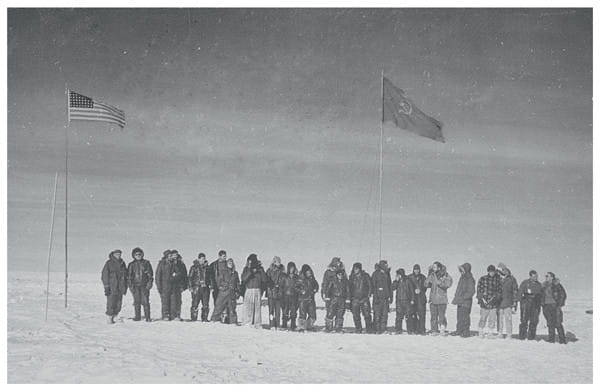
The IGY’s research, discoveries, and vast array of synoptic observations revised or “rewrote” many notions about the Earth’s geophysics. One long disputed theory, continental drift, was confirmed.
The world’s first satellite was launched, the Soviet “Sputnik” in 1957, and more followed, with a U.S. satellite discovering the Van Allen Radiation Belt encircling the Earth.
For many disciplines, the IGY led to an increased level of research that continues to the present.
This success also fostered an additional year of research through International Geophysical Cooperation.
The Special Committee for the IGY became the model on which three post-IGY Scientific Committees developed, for Antarctic, Oceanic, and Space Research, and several focused research efforts including the International Year of the Quiet Sun.
The scientific, institutional, and political legacies of the IGY endured for decades, many to the present day.
Second International Polar Year (1932-1933)
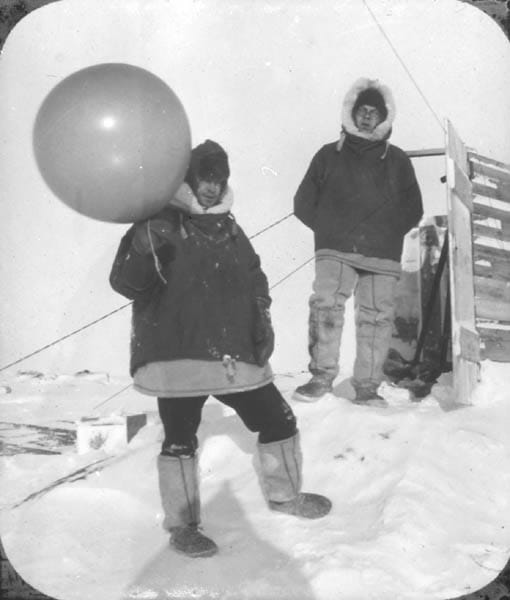
The International Meteorological Organization proposed and promoted the Second IPY during the 1920s, though an official proposal was not made until 1927. Many lessons were learned from its predecessor fifty years ago – mainly the need for more sophisticated instruments that would function in severe polar weather conditions, and the need for a more coordinated effort of analysis of all data collected.
The president of the International Commission for the Second IPY, Danish meteorologist Dan Barfod la Cour, understood these problems and through the crisis of the 1930s pressed for the archiving and publication of all data.
This was eventually accomplished by 1951 by geomagnetist Vitto Laursen after La Cour’s death in 1942.
The Second IPY was also mainly focused on meteorology and geophysics, with 44 nations participating and 16 of them having dedicated national IPY committees. Already existing stations were used or new ones were built. In Antarctica, the contribution of the United States, though later, between 1933 and 1935, was the second Byrd Antarctic expedition, which established a winter-long meteorological station approximately 125 miles south of Little America Station on the Ross Ice Shelf at the southern end of Roosevelt Island. This was the first research station inland from Antarctica’s coast.
In meteorology, research was mainly focused on the study of the atmosphere of the polar regions, to better understand its mechanisms. Extensive oceanographic and glaciological work was undertaken by the USSR. The Second IPY also heralded advances in magnetism, northern lights, and in the “mapping” of ionospheric phenomena that advanced radioscience and technology.
New technology greatly contributed to the research done during the project: The Dutch established an aerological station in Iceland from which they flew small Fokker planes to gather data on the atmosphere. La Cour himself designed and produced self-recording magnetometers for the stations, which vastly improved the observations made. Radiosondes were also used, balloon-borne instruments which took meteorological readings automatically and transmitted them by radio to a home station, but they were still unreliable technology. The fundamental idea behind the Second IPY however, remained the same as the first: to collect as much data as possible using available technology, to be able to pool it together and draw conclusions from it.
First International Polar Year (1882-1883)
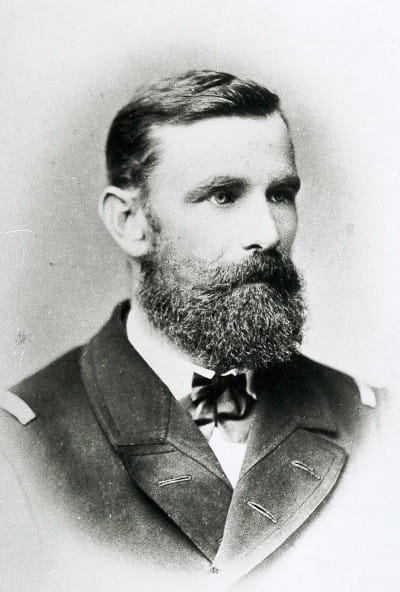
The idea behind the first IPY was born out of the need for more coherent scientific data. The Austro-Hungarian navy officer Karl Weyprecht, himself a veteran of two polar expeditions, found that the scientific data he collected during those voyages regarding the disciplines of meteorology and geophysics were difficult to draw any conclusions from. The data was geographically inconsistent, incomplete, and unable to be compared with any other material. With the support of his colleague, Hans Wilczek, Weyprecht made a proposal, first to scientists at large, and then specifically to the meteorologists at the Second International Meteorological Congress in Rome in 1879: He urged to step away from lone voyages into the Arctic in favor of long-term stations manned by different countries, which would cooperate on their measuring tools as well as times, and thus gain valuable, consistent and comparable data sets.
The meteorologists, who had already been cooperating transnationally and were aware of Weyprecht’s idea, agreed, and the International Polar Commission was formed, to bring the project to reality. Meteorology and Geophysics were the focus (but other disciplines were involved), as well as the Arctic, though Antarctic stations were also planned. The realization of an internationally coordinated effort proved difficult, more so when Weyprecht died suddenly in 1881. It was difficult to find enough nations willing to build a station and have it manned for a year, something that was quite different to the image of polar exploration at the time. Weyprecht’s colleagues on the Commission, Georg von Neumayer and Heinrich Wild, together with Wilczek and others, nevertheless succeeded. Twelve countries participated, with fifteen stations built and officially part of the project.
- Austria-Hungary sent an expedition to Jan Mayen Island,
- the United States to Point Barrow, Alaska and to Lady Franklin Bay at Ellesmere Island. The Lady Franklin Bay expedition was left without supplies for years because supply ships encountered too-strong ice. In the end, only six men of the original twenty-five survived, but they managed to save the scientific data.
- Denmark’s station was at Godthab in Western Greenland,
- Britain’s in Fort Rae in Canada,
- Finnish ones in Sodankylä and Kultala,
- Norwegian one at Bossekop in Altenfjord.
- France and Germany were the only ones to have stations in the Southern Hemisphere, with the French one in Orange Bay at the southern tip of Tierra del Fuego and the German one at Moltke-Hafen in South Georgia. Germany’s second station was at Kingua-Fjord on Baffin Island, and additional observations were made by an expedition stationed at the Moravian mission in Nain on Labrador.
- Russian stations were at Karmakuly at Nowaja Semlja and at Sagasta at the Lena estuary,
- the Swedish one at Cap Thordsen in the Spitzbergen archipelago.
- The ship of the Dutch expedition, “Varna”, became trapped in ice on the way to the station point in Dicksonhafen at the mouth of the Yenisei, and the scientists made their observations in the Kara Sea near Waigach Island instead.
The stations were organized as follows:
Though the sharing and later publication of the measured data ran up against issues of national competition of the participating countries, and further international scientific projects were still difficult to get support for, the First IPY proved that transnational coordination in the polar regions was possible.
Sources and Further Reading
Barr, Susan and Lüdecke, Cornelia (eds.). The History of the International Polar Years (IPYs). From Pole to Pole. Berlin, Heidelberg: Springer. 2010.
National Academies of Sciences, Engineering, and Medicine. Lessons and Legacies of International Polar Year 2007-2008. Washington, DC: The National Academies Press. 2012. Online
Launius, Roger D., Fleming James Rodger, and David H. DeVorkin (eds.). Globalizing Polar Science: Reconsidering the International Polar and Geophysical Years. New York: Palgrave Macmillan. 2010.
“The International Geophysical Year.” Issues in Science and Technology 42, no. 3 (Spring 2026): 108.