
News
The Arctic in China’s New Five-Year Plan
China’s latest Five-Year Plan could help it build a more lasting presence in the Arctic, where scientific research, energy supplies and shipping routes feature among its interests. Covering 2026–2030, the plan provides for stronger support for polar expeditions and advances in marine technology, although it does not set out a separate Arctic strategy.
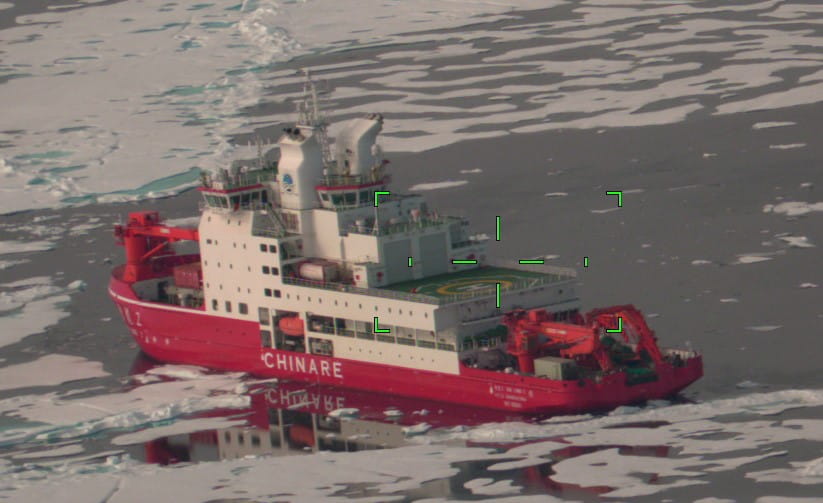
The Chinese research icebreaker Xue Long 2 in Arctic waters north of Alaska, 25 July 2025. Photo: U.S. Coast Guard, Air Station Kodiak.
Operating in the region requires ships, reliable weather information and the ability to navigate difficult waters. Plans to improve expedition support and navigation services could strengthen those foundations, alongside research vessels such as Xuelong 2 and Tansuo 3, which help gather information about sea ice, ocean conditions and the seabed.
These priorities form part of a broader development programme that President Xi Jinping presented to international business leaders at the APEC CEO Summit in Shenzhen on 18 November 2026. Xi described the plan as an invitation to cooperate with China, linking the country’s development to opportunities for businesses across the Asia-Pacific and the wider world.
His speech placed innovation and the transition towards a lower-carbon economy at the centre of that outlook, with an emphasis on bringing scientific advances into everyday industrial activity. Examples ranged from factory robots and autonomous driving to drone deliveries, illustrating the role that new technologies are expected to play in China’s growth. Xi also called for closer international cooperation in science, artificial intelligence and the digital economy, while supporting open trade and stable supply chains.
For foreign businesses, he pledged greater access to the Chinese market and further changes to rules, regulation and standards to create more predictable operating conditions. These statements outlined the economic direction of the Five-Year Plan, without announcing Arctic projects or addressing the region directly.
In the Arctic, China’s interest in maritime connections centres on the Northern Sea Route (NSR), which follows Russia’s Arctic coast and forms part of the broader Northeast Passage linking the Atlantic and Pacific oceans, as shown on the map.
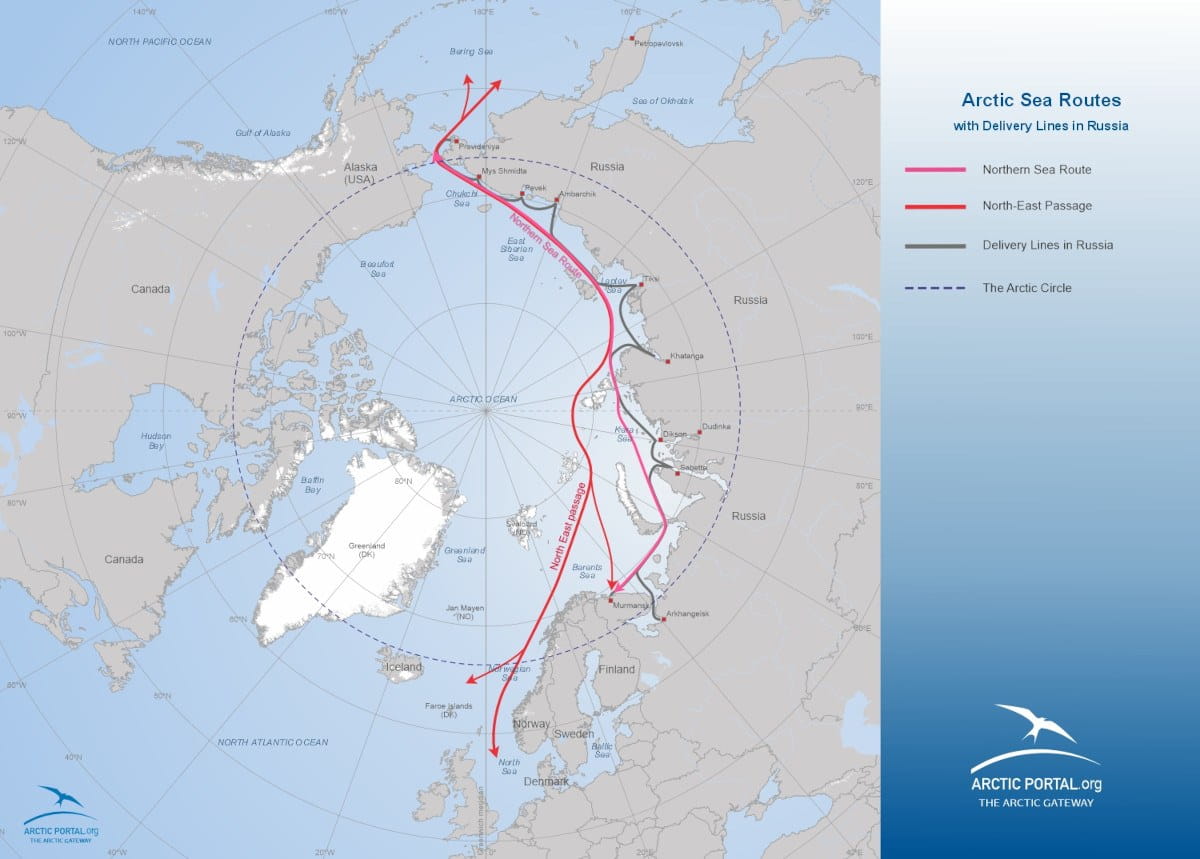
Other Arctic shipping corridors include theNorthwest Passage through the Canadian Arctic and a possible future Central Arctic Shipping Route across the Arctic Ocean.
Energy is another consideration, with Chinese companies investing in Russian liquefied natural gas projects, including Yamal LNG and Arctic LNG 2. Commercial prospects nevertheless depend on seasonal access, ice conditions, Russian regulations and available icebreakers.
China also intends to contribute more actively to international maritime rule-making, an ambition that could affect future discussions about shipping, biodiversity and environmental protection in the Arctic. Taken together, these commitments could strengthen its long-term position, although the plan does not establish an immediate intention to militarise the region.
Sources: Observer Research Foundation, “The 15th Five-Year Plan: Reading China’s Arctic Ambitions”, 17 November 2026, State Council of the People’s Republic of China / Xinhua, “China’s 15th Five-Year Plan presents opportunities for growth of Asia-Pacific and beyond: Xi”, 18 November 2026, Ministry of Foreign Affairs of the People’s Republic of China, “Keynote Speech by President Xi Jinping at the APEC CEO Summit”, 18 November 2026.
The tags below provide an opportunity to view previously posted related news within the selected category