
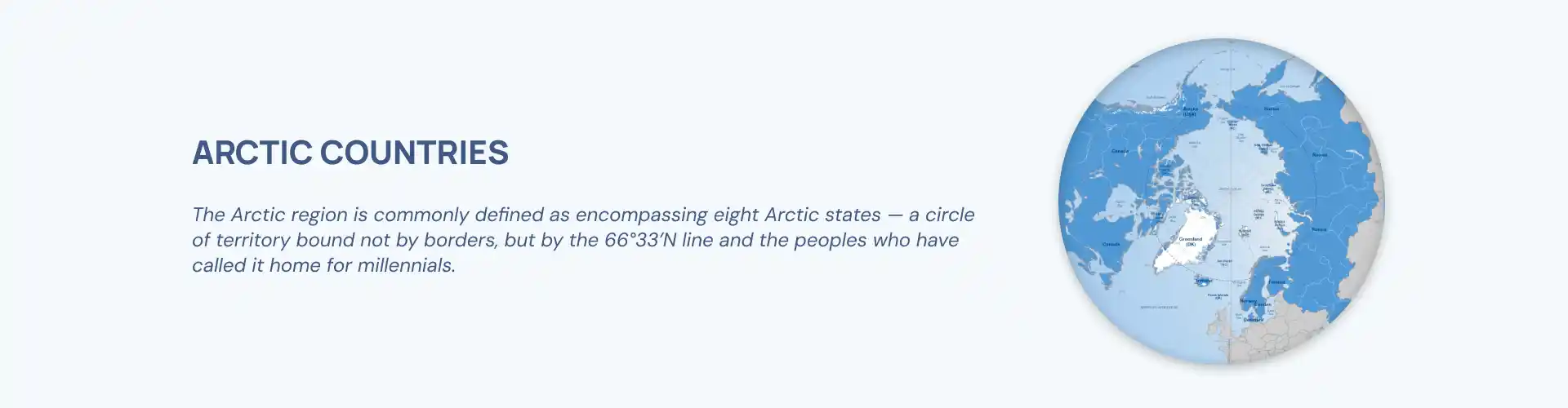
Arctic Countries
Arctic States
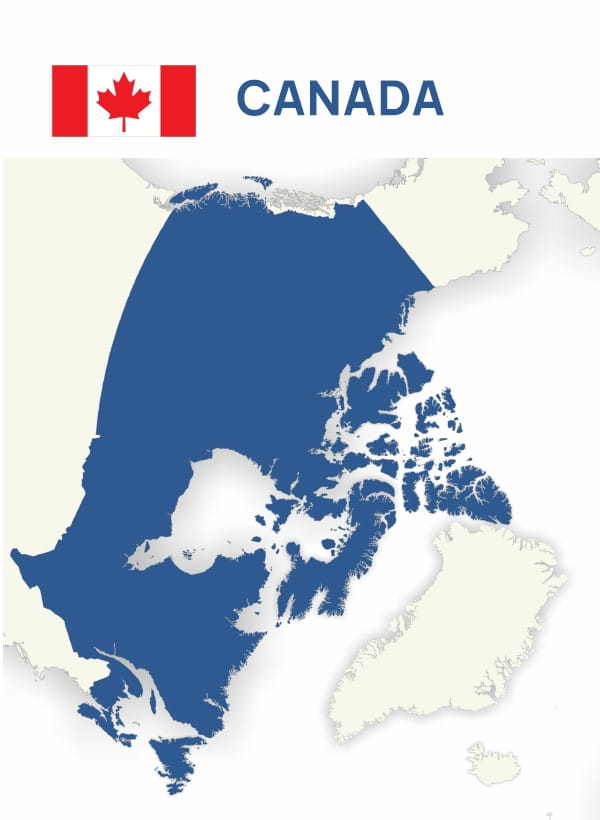
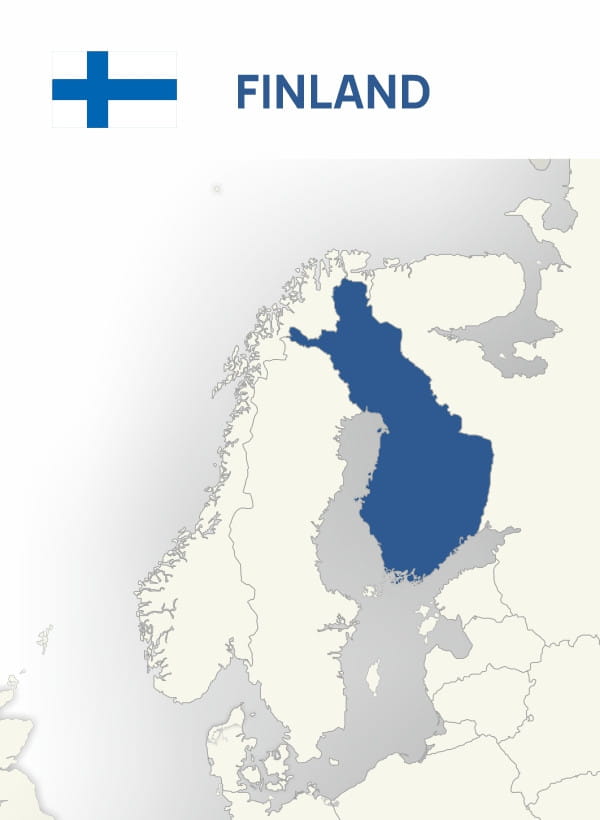
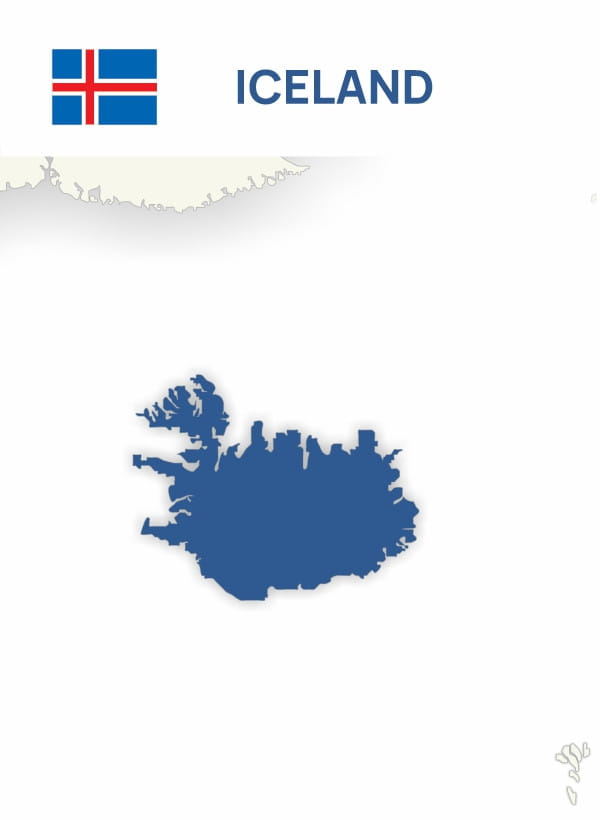
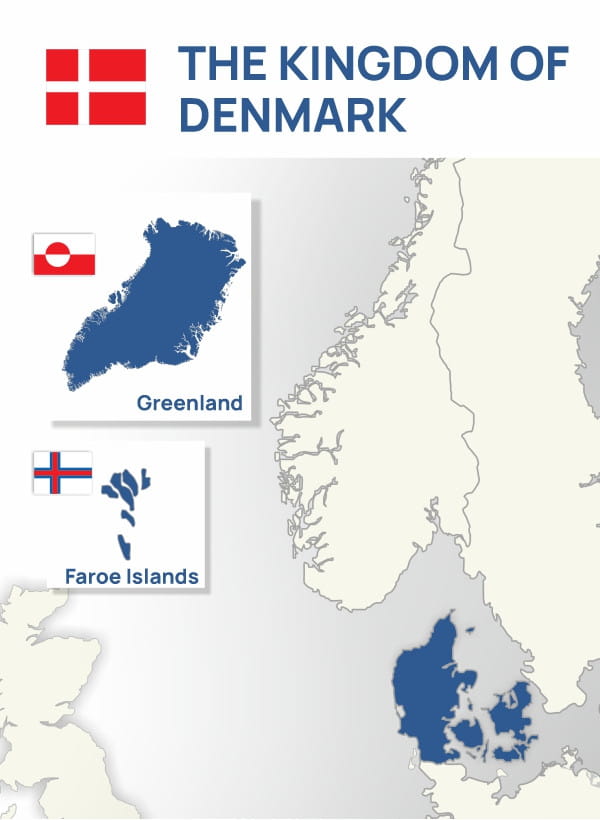
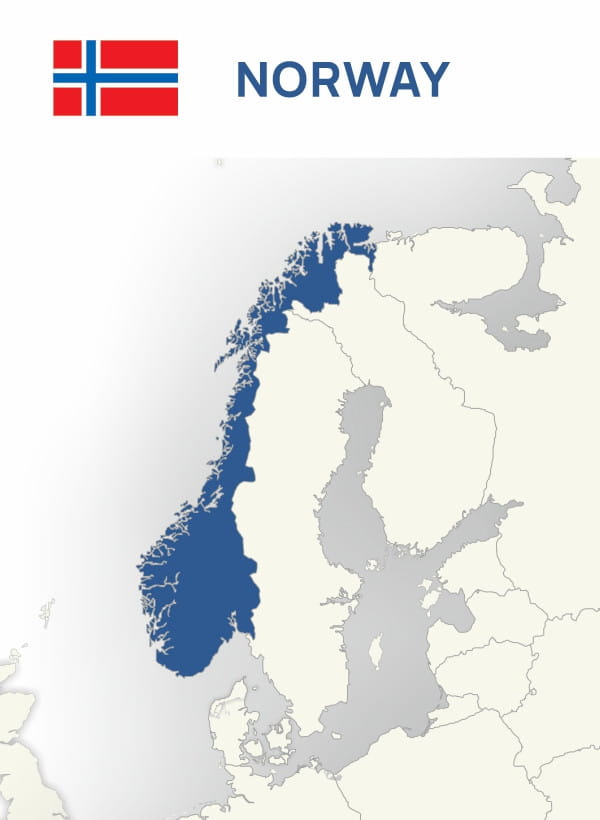
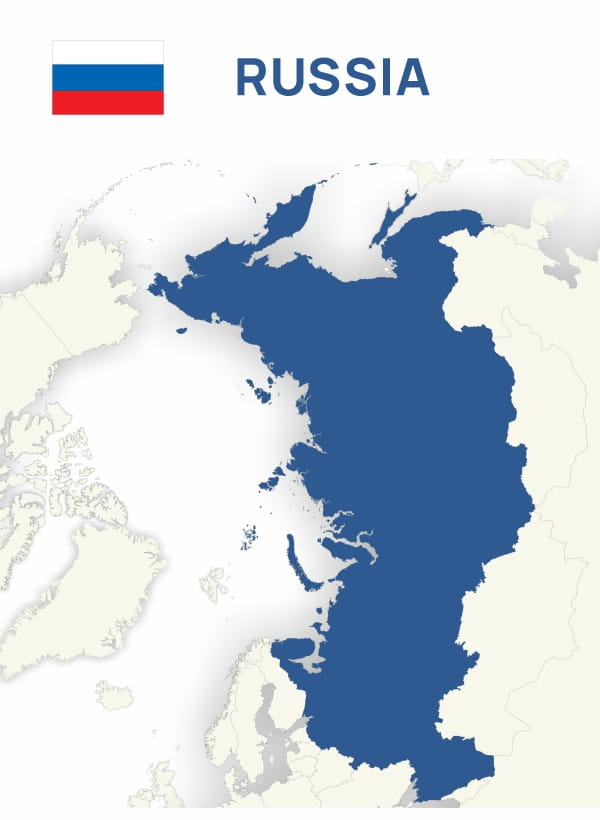
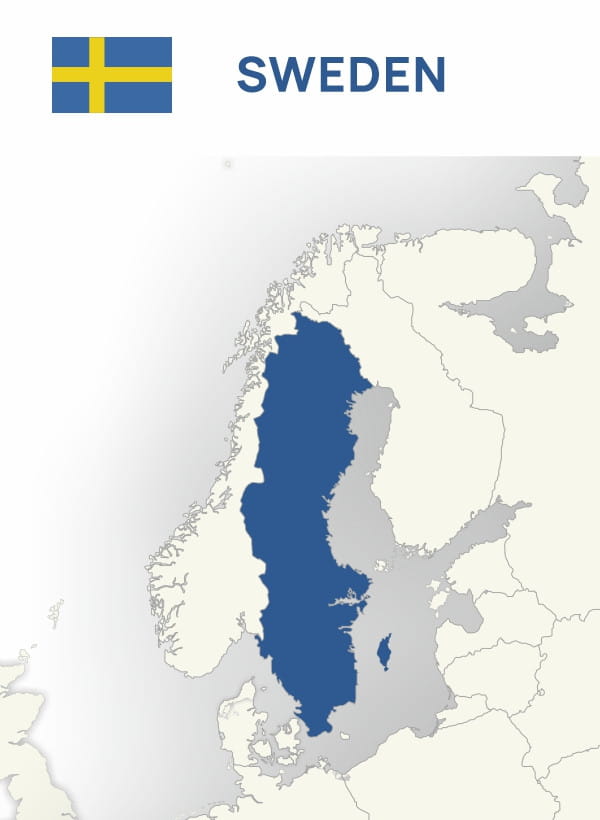
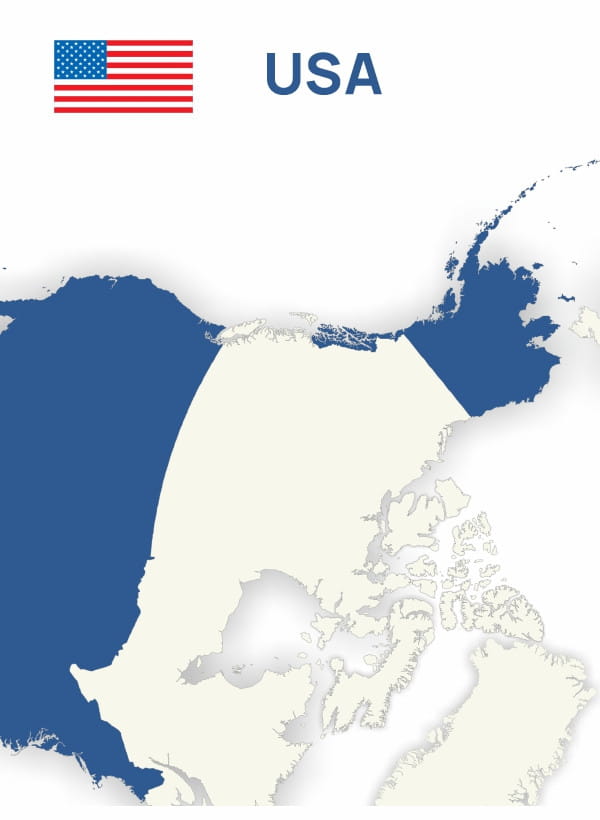
The Arctic States, defined by geography and governed across sovereign borders, share responsibility for one of the planet's most sensitive regions.
Indigenous Peoples and Circumpolar Cooperation
North meets North
Indigenous peoples' organizations remain central actors in Arctic cooperation. Cross-border collaboration among Indigenous communities has strengthened over recent decades, especially in areas related to cultural preservation, language revitalization, environmental protection, and human rights.
"North meets North" reflects the growing cooperation among Arctic communities themselves, beyond state-level diplomacy.
Key Indigenous Organizations
Arctic Athabaskan Council (AAC)
Aleut International Association (AIA)
Gwich'in Council International (GCI)

Saami Council (SC) Sámiráðði

Inuit Circumpolar Council (ICC)
The Russian Association of Indigenous Peoples of the North (RAIPON)
History and Governance
From Cold War frontier to international cooperation
For much of the 20th century, the Arctic was heavily by geopolitical tensions between East and West, strategically important for military operations and nuclear deterrence. The path toward the cooperation we know today runs through a few precice milestones.
Today
The Arctic and the Global Community
The Arctic is increasingly connected to the rest of the world. Climate change is transforming the region faster than almost anywhere else on Earth, affecting sea ice, glaciers, permafrost, ecosystems, and local communities.
At the same time, the Arctic's natural resources, fisheries, renewable energy potential, and emerging shipping routes have increased international interest in the region. Countries from Europe, Asia, and beyond are expanding their scientific, economic, and political engagement in Arctic affairs. As global attention on the Arctic continues to grow, international cooperation, scientific research, Indigenous participation, and sustainable development remain critical to the future of the region.
Source: Arctic Human Development Report (Chapter 12)