
Governance & Law
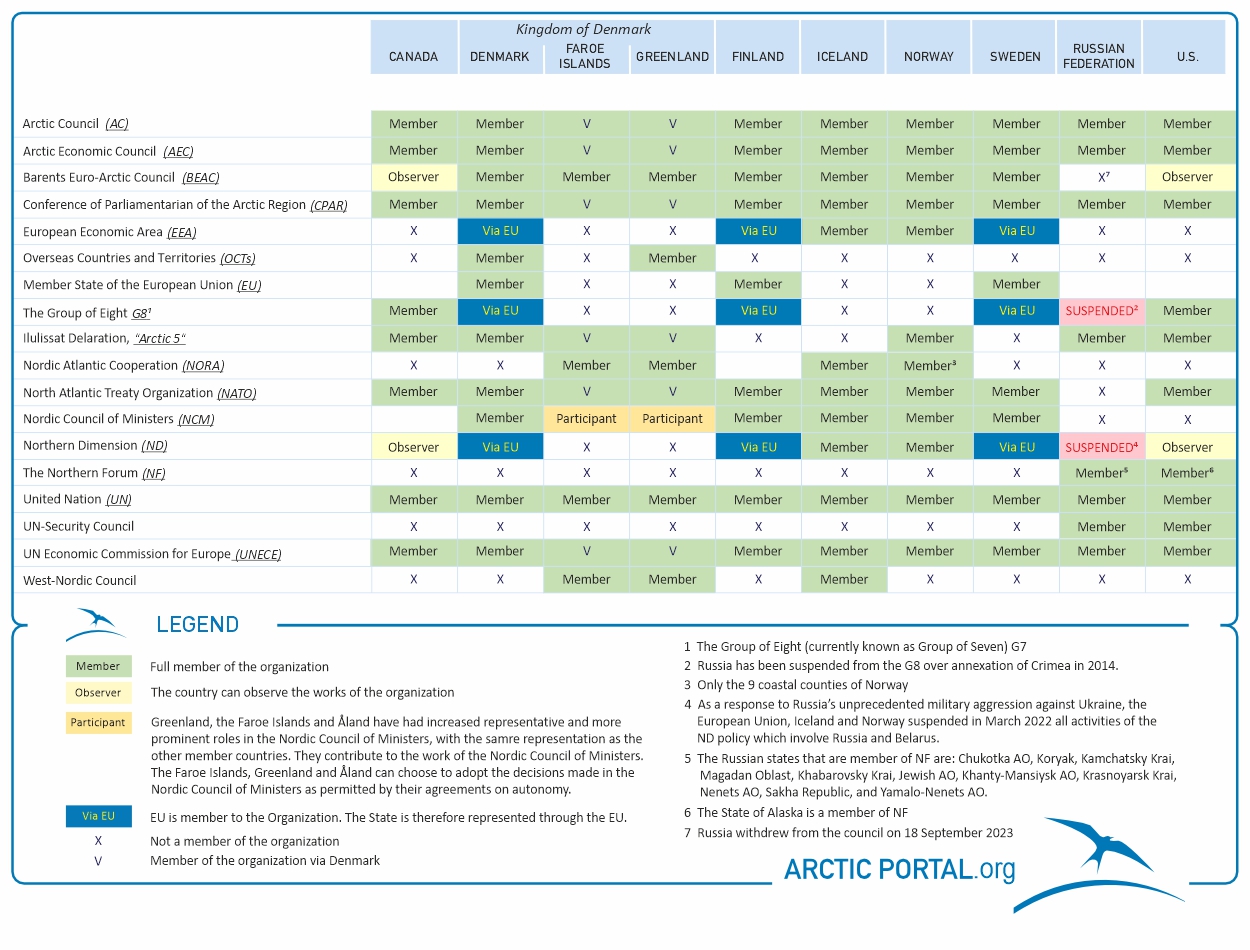
Overview of Organizations and Forums in the Arctic Region and Arctic Nations Membership
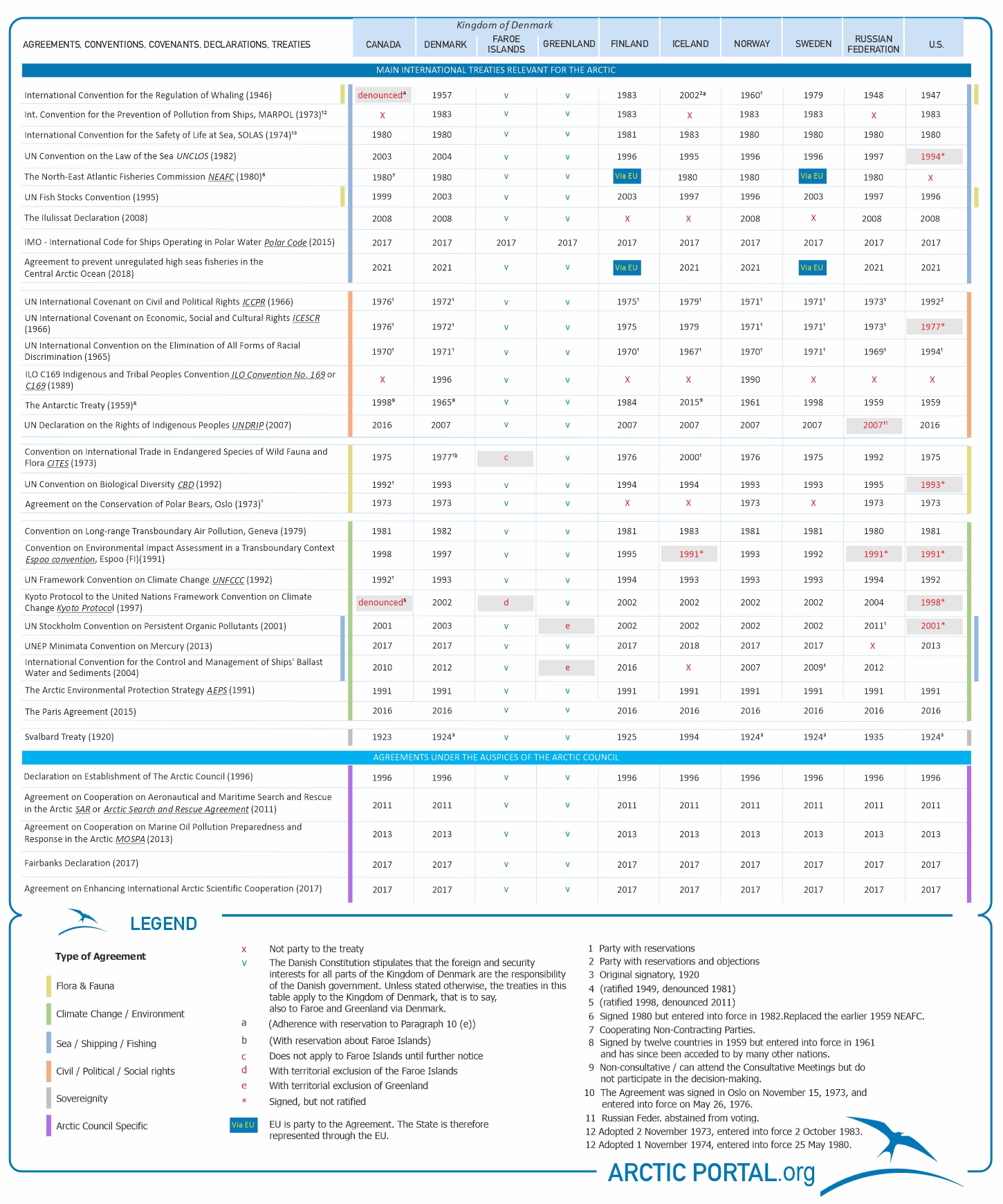
Overview of International Treaties and Agreements related to the Arctic
Arctic Governance
Arctic Governance is shaped by cooperation among Arctic States, Indigenous Peoples, Regional Organizations and International Institutions. It includes the Policies, Agreements and Frameworks that guide decision-making on issues such as Environmental Protection, Sustainable Development, Security, Scientific Cooperation and the use of Arctic Resources. While there is no single authority governing the Arctic, Cooperation takes place through National Governments, International Law and Regional Forums such as the Arctic Council. Together, these Mechanisms help address shared Challenges and support Peaceful and Responsible management of the Region.
Organizations, Projects and Agreements of high importance relating to the Arctic Ocean

Law of the Sea
The governance of Arctic waters is shaped by a number of international legal frameworks that regulate navigation, maritime boundaries, resource use, environmental protection and shipping safety.
Among the most important are the 1982 United Nations Convention on the Law of the Sea (UNCLOS) and the International Code for Ships Operating in Polar Waters (Polar Code), together with the SOLAS and MARPOL conventions. UNCLOS establishes the rights and responsibilities of States in the world’s oceans, including maritime jurisdiction, access to marine resources, scientific research and the peaceful settlement of disputes. The Polar Code addresses the particular challenges of shipping in Arctic and Antarctic waters, with provisions covering vessel safety, equipment, crew training and pollution prevention.
Together, these instruments provide the main legal basis for managing activities at sea and promoting safe and environmentally responsible shipping in polar regions.