
News
Petermann Glacier Loses 76 km² of Floating Ice in Major Arctic Calving Event
A large ice island broke away from Petermann Glacier in northwest Greenland in August 2026. Since then, satellite observations have followed its journey towards Nares Strait, while researchers continue to monitor fractures that could lead to further major calving events.
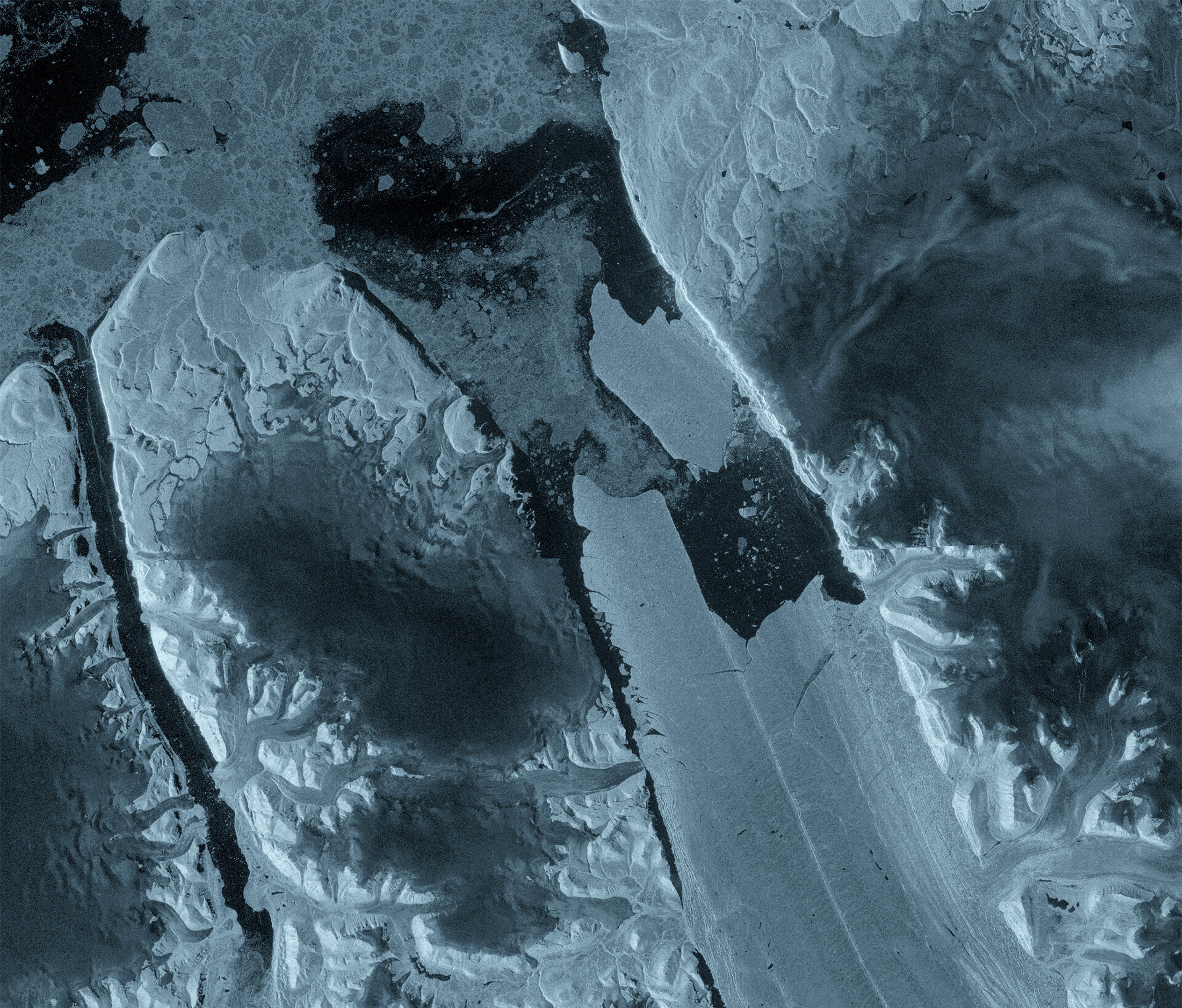
Credit: contains modified Copernicus Sentinel data (2026), processed by ESA Licence: CC BY-SA 3.0 IGO OR ESA Standard Licence
On 4 August 2026, approximately 76 km² of floating ice detached from Petermann Glacier in northwest Greenland, forming a large tabular ice island. The newly calved ice mass is estimated to be up to 150 metres thick and covers an area roughly comparable to Manhattan. The event marked the glacier’s largest loss of floating ice since 2012 and the most significant Arctic calving event since 2020.
The break did not occur suddenly without warning. Researchers had been monitoring the glacier’s floating ice tongue for several years, following the development of large fractures and signs of instability. Satellite observations in the days before the calving showed rapid changes across the ice tongue, allowing scientists to closely follow the final stages of the break.
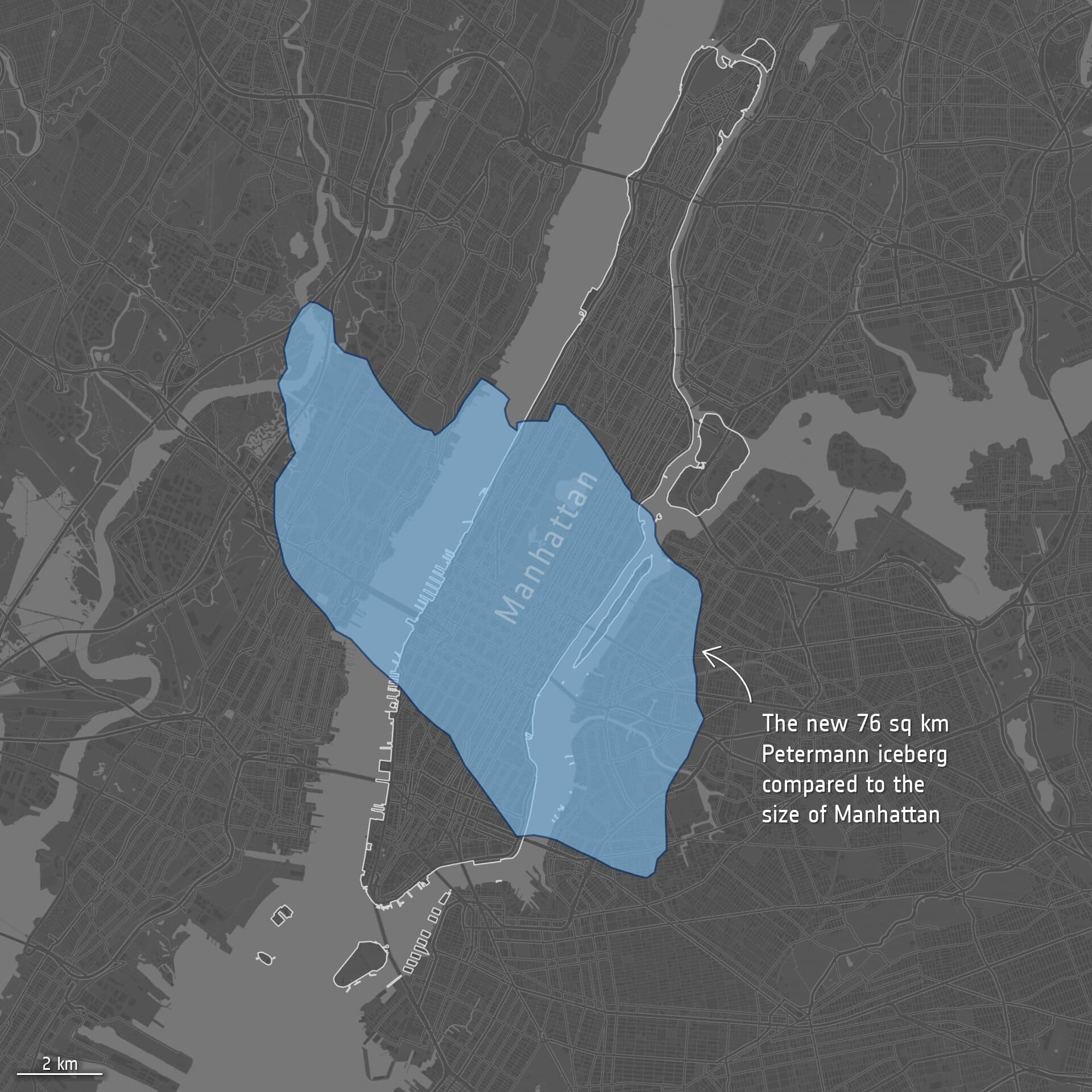
Credit: ESA Licence: ESA Standard Licence
Shortly after the break, the ice island began moving through Petermann Fjord. Its subsequent drift, including its interaction with Joe Island and movement towards Nares Strait, has been closely followed through satellite observations, while researchers continue to monitor two major fractures developing across the glacier’s floating ice tongue.
Years of satellite monitoring
The break followed years of monitoring by an international research team involving the University of Ottawa, the University of Stirling, Lancaster University, the University of Leeds and Environment and Climate Change Canada. Since 2019, researchers have been observing Petermann Glacier and tracking the development of large fractures across its floating ice tongue. Images from the European Space Agency’s Copernicus Sentinel-1 mission showed increasing deterioration in the days before the event. Radar observations on 3 August revealed significant changes along the ice tongue, and by the following day a large section had detached from its eastern side.
The event is particularly significant because large tabular icebergs are relatively common around Antarctica, while ice islands of this size are much rarer in the Arctic. Their long lifespan allows researchers to follow how large ice masses drift, evolve and gradually break apart, providing useful information about glacier dynamics, ocean conditions and the processes involved in glacier retreat. Observations of Arctic ice islands can also contribute to a broader understanding of similar processes across the polar regions.
Petermann Glacier is one of Greenland’s largest marine-terminating glaciers and has experienced several major calving events in recent decades, including in 2008, 2010 and 2012. The 2010 event produced an ice island of more than 250 km², while the 2012 event released approximately 130 km² of floating ice. Since then, the glacier’s floating ice tongue had remained relatively stable, despite a number of smaller calving events. The August 2026 break therefore marks its largest loss of floating ice in more than a decade and provides researchers with a new opportunity to follow the evolution of a large Arctic ice island over time.
Ice island moves into Nares Strait
After separating from Petermann Glacier, the ice island began drifting through Petermann Fjord towards Nares Strait, the narrow waterway between Greenland and Canada. NASA satellite observations showed that during the first week after the calving event, it travelled at an average rate of about 3 km per day.
By late August, the ice island had reached the mouth of the fjord, where it encountered Joe Island (Joe Ø), a small rocky island located along the route into Nares Strait. Such interactions can play an important role in the evolution of large ice islands: a previous Petermann ice island, formed in 2010, fragmented after colliding with the same island. In this case, however, the 2026 ice island survived the encounter without significant fragmentation and continued its movement towards Nares Strait.
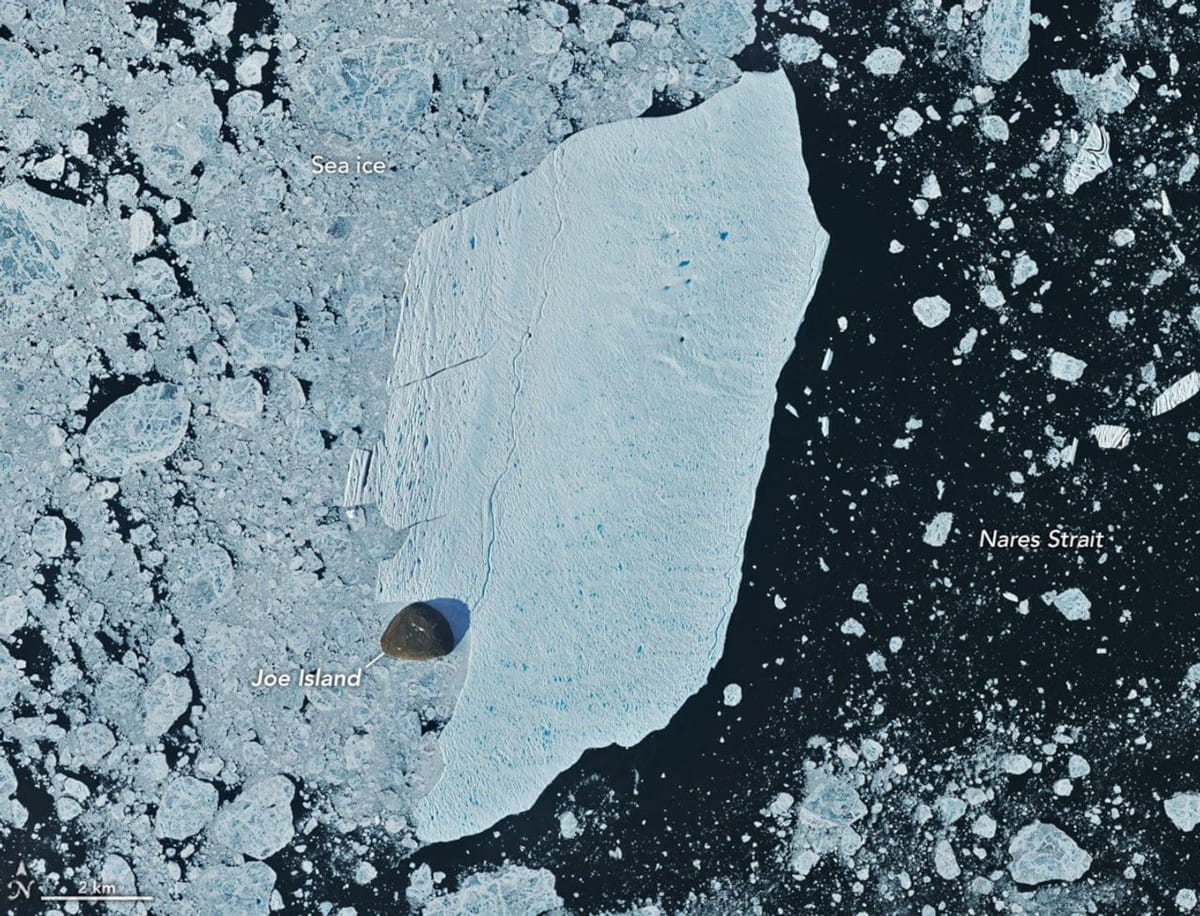
August 24, 2026, NASA Earth Observatory/Lauren Dauphin
The 2026 ice island, however, survived the collision without significant fragmentation. Satellite imagery later showed it turning away from Joe Island and continuing southwest through Nares Strait. Over time, winds, ocean currents, tides and melting are expected to weaken the ice and gradually break it into smaller fragments.
Further calving events are expected
Researchers are continuing to monitor two large rifts that remain across Petermann Glacier’s floating ice tongue. If these fractures continue to propagate, they could lead to the formation of two further large ice islands, each estimated to cover around 80–100 km². The timing of these possible calving events remains uncertain. Ongoing satellite observations will therefore be important for tracking the development of the remaining fractures, as well as the movement and fragmentation of the ice island that detached in August 2026.
Monitoring for science and Arctic navigation
Tracking the ice island is also important for maritime safety. Large blocks of ice can remain in Arctic waters for years and may travel considerable distances. As they gradually fragment, smaller pieces can become more difficult to detect and can present hazards to vessels, offshore infrastructure and other marine activities.
Environment and Climate Change Canada is monitoring the ice island’s trajectory and assessing possible risks to Arctic navigation.
Together, observations from Sentinel-1, Landsat and other monitoring systems are providing researchers with a detailed view of both the changes occurring at Petermann Glacier and the subsequent journey of one of the Arctic’s largest recent ice islands.
Sources: uOttawa, ESA, NASA
The tags below provide an opportunity to view previously posted related news within the selected category